Implications and the Concentration of Power
The agentic economy carries the greatest opportunity and the gravest risk of the era in the same hand. These are not separate futures to choose between. They are joint consequences of the same machinery, and the balance between them is not yet set. This section is the diagnosis. It specifies the mechanisms by which each outcome could prevail and what tips the scale. The constructive answer it points toward is the subject of the section that follows.
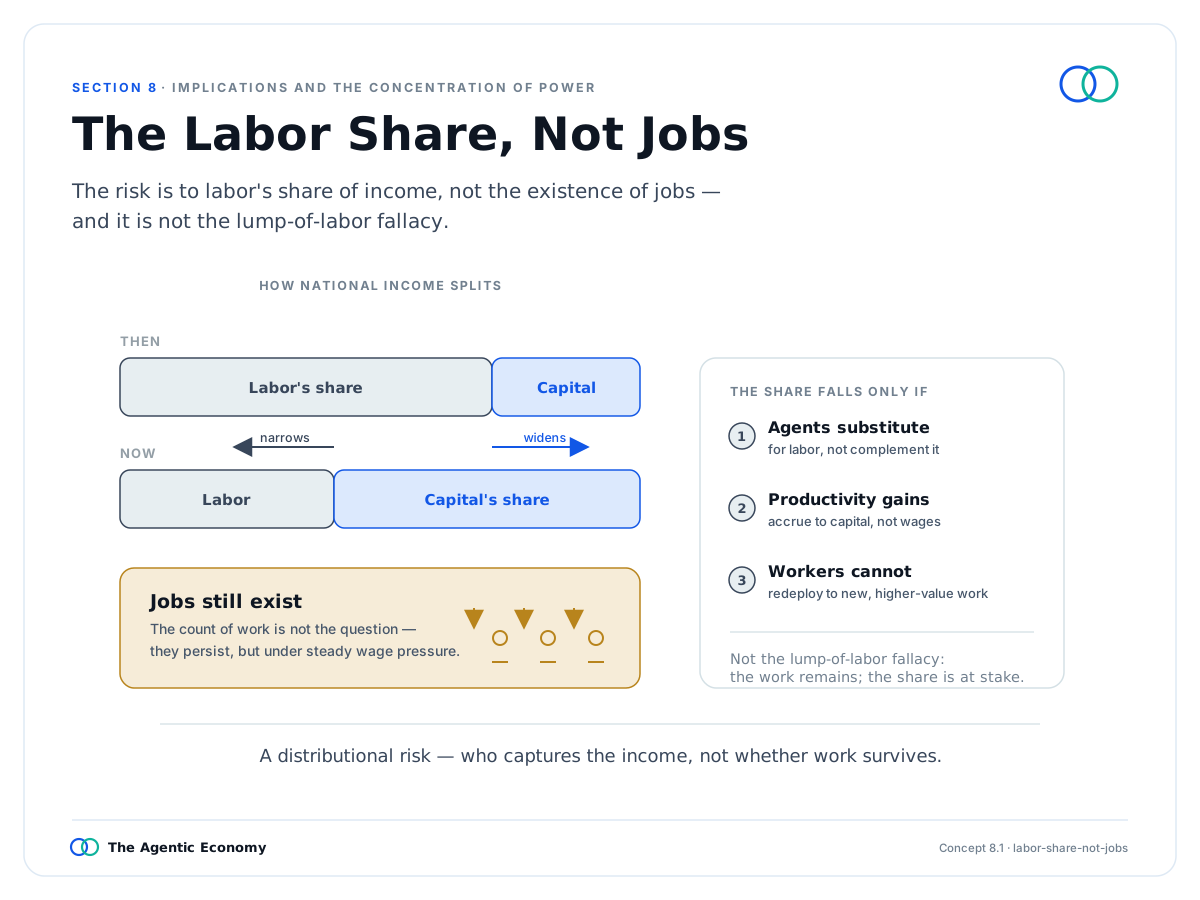
It holds under three conditions.
First, new tasks keep emerging, as they always have, but software colonizes them faster than humans can be retrained into them, collapsing the historical lag between displacement and reabsorption toward zero. The agent is not merely a better worker on today's tasks. It is a faster occupier of tomorrow's.
Second, the marginal price of agentic labor tracks the falling cost of inference, so across more and more of the task frontier the machine is simply cheaper at the margin, dragging the human clearing wage down with it.
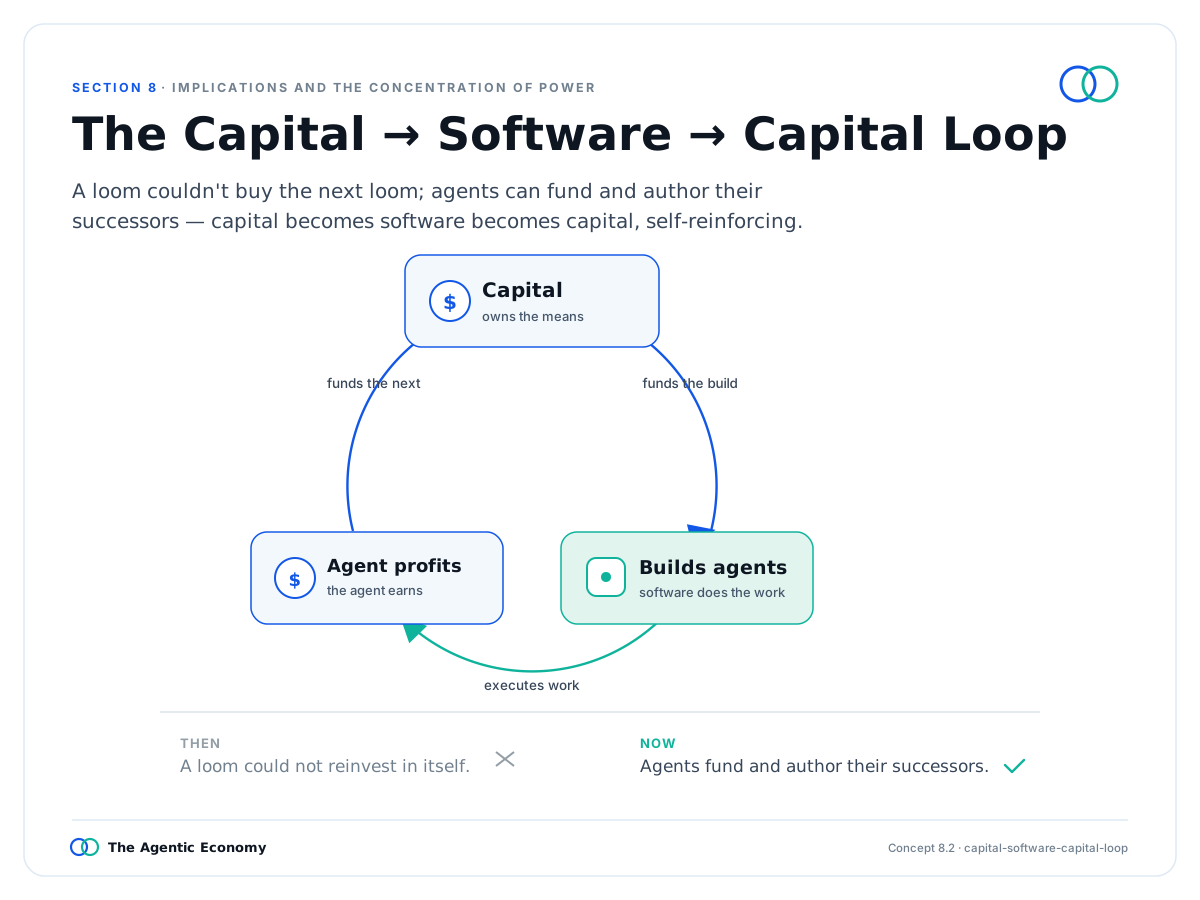
Third, and this is the genuine break from every prior wave, capital can fund its own expansion. A loom never earned the capital to buy the next loom or wrote the design for it. Agents can generate the surplus that finances more agents and authors their successors, making the capital share self-reinforcing rather than bounded by diminishing returns. This is the capital-to-software-to-capital loop. Where the three conditions hold, the route by which most people have always claimed a share of output, their labor, narrows toward a trickle.
But even all three conditions holding does not produce immiseration. It produces a distributional problem, not an output problem. The output of such an economy is plausibly enormous. This is, after all, the abundance case. The catastrophe, if it comes, is entirely about who owns the capital stock that is producing the abundance. And the pessimistic case quietly assumes humans retain no priced edge and own nothing.
Neither is a law of nature. Human provenance may itself command a premium in care, status, authenticity, and the simple demand to be served by a person, and rising abundance could widen that space rather than shrink it. Wherever an agent must touch the physical world, bear legal liability, or actuate in regulated domains, a cost floor persists and human work clusters there. And if displaced workers own capital, through pensions, broad equity, or distributed tokens, the fall in the labor share is offset by a capital share they participate in.
That is the hinge of the entire section, and it should be stated bluntly: the labor question and the ownership question are the same question. The collapse of the labor share is a social catastrophe only if ownership is concentrated. If ownership is broad, the identical automation is simply broadly shared abundance. The fear of mass technological unemployment is, on inspection, a fear about the distribution of capital. That is why the answer, when we reach it, is about ownership and not about preserving jobs. It also reconciles the tension flagged at the outset of this argument: the individual is genuinely magnified by agentic tools even as the labor share of output may fall. Both are true at once. The same person is made far more capable and stands to claim a far smaller share of what is produced.
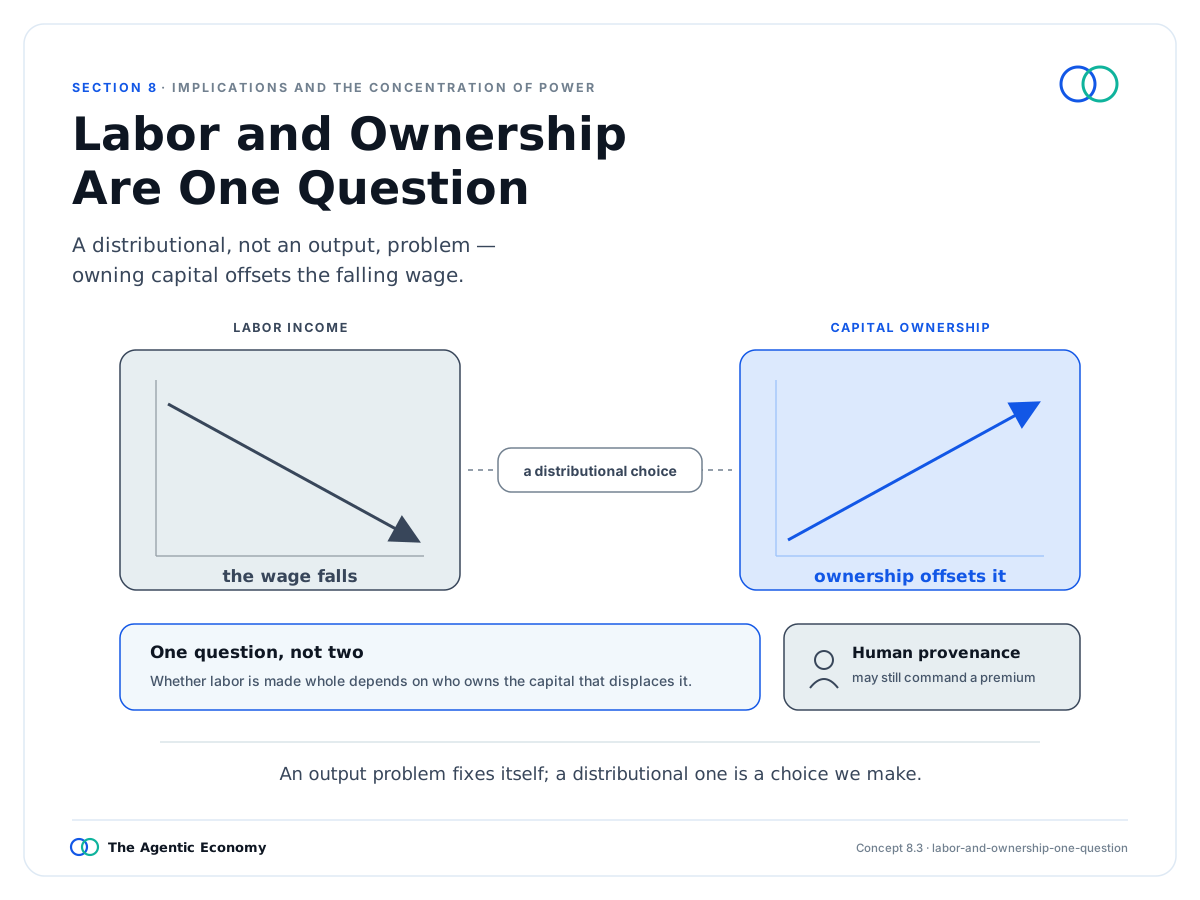
The contradiction dissolves only at the level of ownership. A magnified individual who owns a share of the machines shares in the abundance they create. A magnified individual who owns nothing is merely a more capable worker whose wage is still being dragged toward the cost of the agent working beside them.
That makes the concentration of power the decisive question. "Concentration is the default" is not a law of physics. The history of open protocols, forking, and commoditization is a record of cases where power dispersed rather than pooled. Concentration wins at layers that combine strong increasing returns, where network effects and data flywheels mean each user makes the product better for the next, with a non-forkable bottleneck.
You can fork open-source code. You cannot fork the dominant currency, a regulatory license, a deep liquidity pool, or an override key. Openness disperses power at the layers where the frontier commoditizes, switching costs are low, and forking is credible. So the right question is not whether the agentic economy concentrates. It is which of its layers sit on non-forkable bottlenecks.
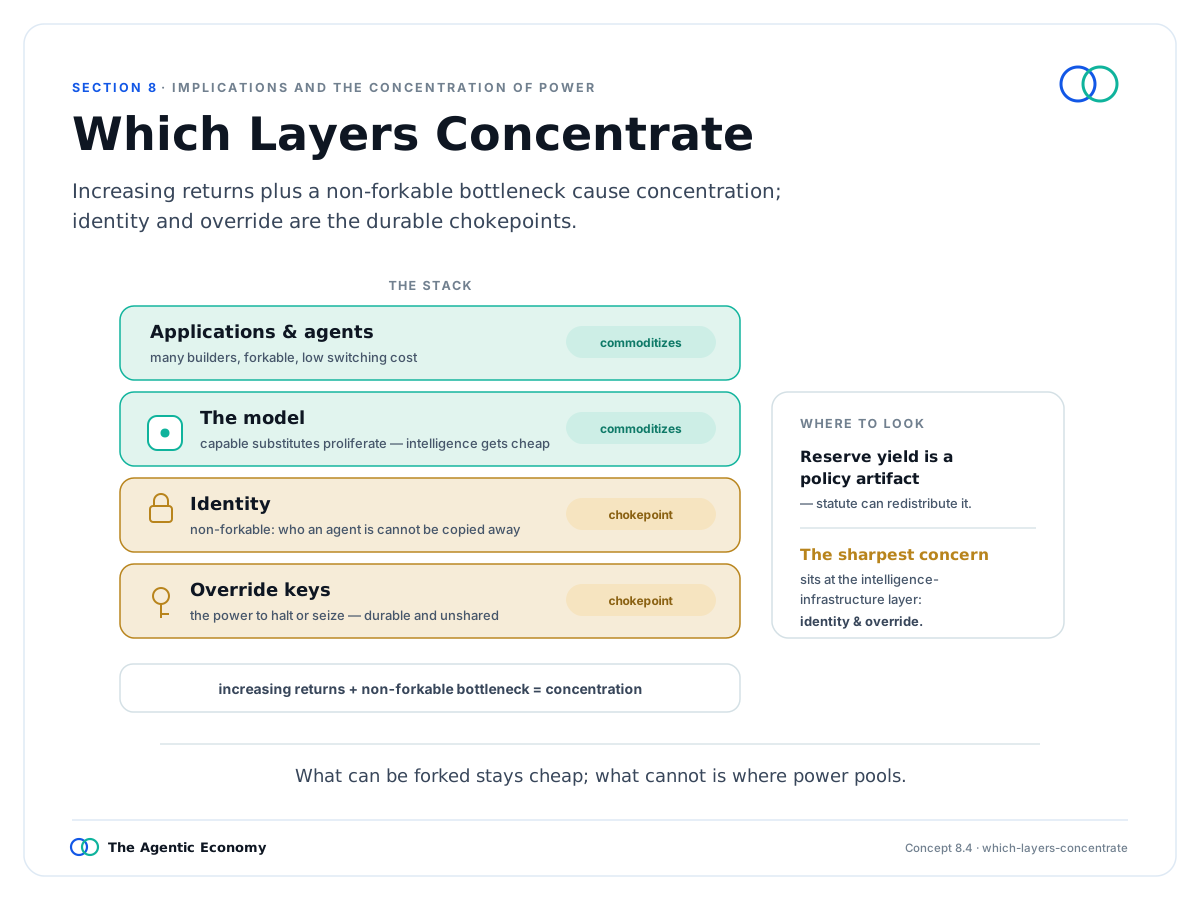
The foundation-model layer, often imagined as the great toll, is among the most likely to commoditize. Frontier capability has repeatedly been matched by open weights within a year or two, and this is accelerating, and inference prices have fallen by orders of magnitude, so the durable rent migrates off the raw model and onto its complements: proprietary data, distribution, and the lock-in of an agent that knows you.
Bridges are less a rent story than a security one, the most-exploited surface in the space. Oracles tend to concentrate around the source everyone else uses, but remain forkable. The genuinely durable chokepoints are the identity layer and the override key. Identity, because one verified identity is reused everywhere, with winner-take-most dynamics. The override, because whoever can reverse the deterministic core, in the limit, controls the firm. And token governance, sold as democratization, is plutocracy by the construction of one-token-one-vote unless it is deliberately engineered against that force.
One concentration layer deserves direct treatment, because the author writes from inside it. A dominant stablecoin issuer captures the yield on the reserves backing the money it intermediates. The author and the author's own industry are among the parties positioned to benefit from exactly the concentration this section warns about.
The issuer's reserve yield is largely a policy artifact. It exists in its current form because the law forbids issuers from passing that yield to holders as interest, even as it increasingly permits value to be returned through usage- and activity-based rewards and distribution partners rather than as a direct, deposit-like payment. What statute creates, statute can redistribute. What is barred as interest can be channeled as participation, by competition, by regulation, or by sharing it with the people who hold and use the money.
This is not aspiration. Broad distribution of reserve income to the ecosystem is already the operating practice, and it is rising. So the resolution is evidenced, not merely promised. This rent is contestable and policy-dependent, reasonable policy may well require more of it to flow to holders.
The sharpest concentration concern sits not here but at the intelligence-infrastructure layer, in entities that hold both economic and intelligence infrastructure at once, and this is increasingly a topic of policy discussion: should society at large hold stakes in the capital of the largest AI companies.
The concentration question is also the geopolitical one, because the chokepoints that pool rents are the ones that become weapons. The economic operating system should be technologically neutral and governed by many stakeholders rather than by any single state, and at the protocol and technical layers that neutrality is genuinely achievable and worth defending, because those layers are forkable and ownerless.
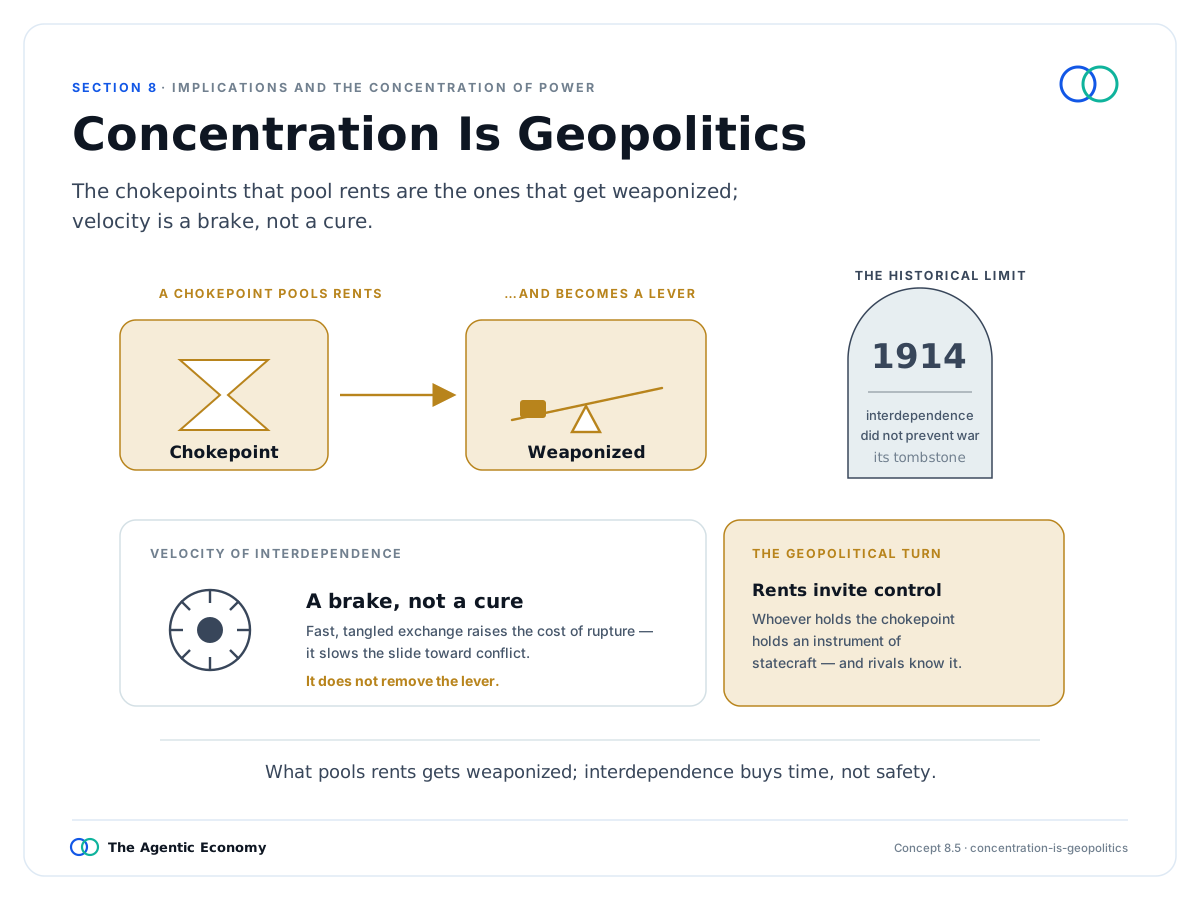
But the monetary layer cannot be made neutral by governance design as long as one state issues the dominant unit and can reach through the rails to freeze, seize, or exclude. A dominant digital dollar is, by the same fact, both the most likely path to global scale and the single largest concentration-of-control risk. Pretending the whole stack can be neutral is the naive version of the argument. Specifying which layers can and cannot is the credible one.
Whoever sits at the settlement rail, the reserve currency, or the identity layer gains both a panopticon and a switch, the weaponized interdependence already visible in financial sanctions and clearing exclusion. Deep interdependence raises the cost of conflict at the margin and modestly reduces its frequency below the great-power threshold, especially among democracies. The agentic economy could be the most pacifying economic order ever built or the most weaponizable. Which it becomes depends on whether its chokepoints are neutralized or captured.
What, then, of the abundance, the promise that this same economy is the greatest opportunity in history to lift people out of poverty and widen access to health, education, and information? It is real, and it deserves its weight. But abundance and inequality can rise together. The strongest optimistic case is consumer surplus. If agents drive the marginal cost of medical diagnosis, tutoring, legal advice, and expert knowledge toward zero, the real living standard of someone with very little money income can climb steeply even as measured income and wealth inequality widen.
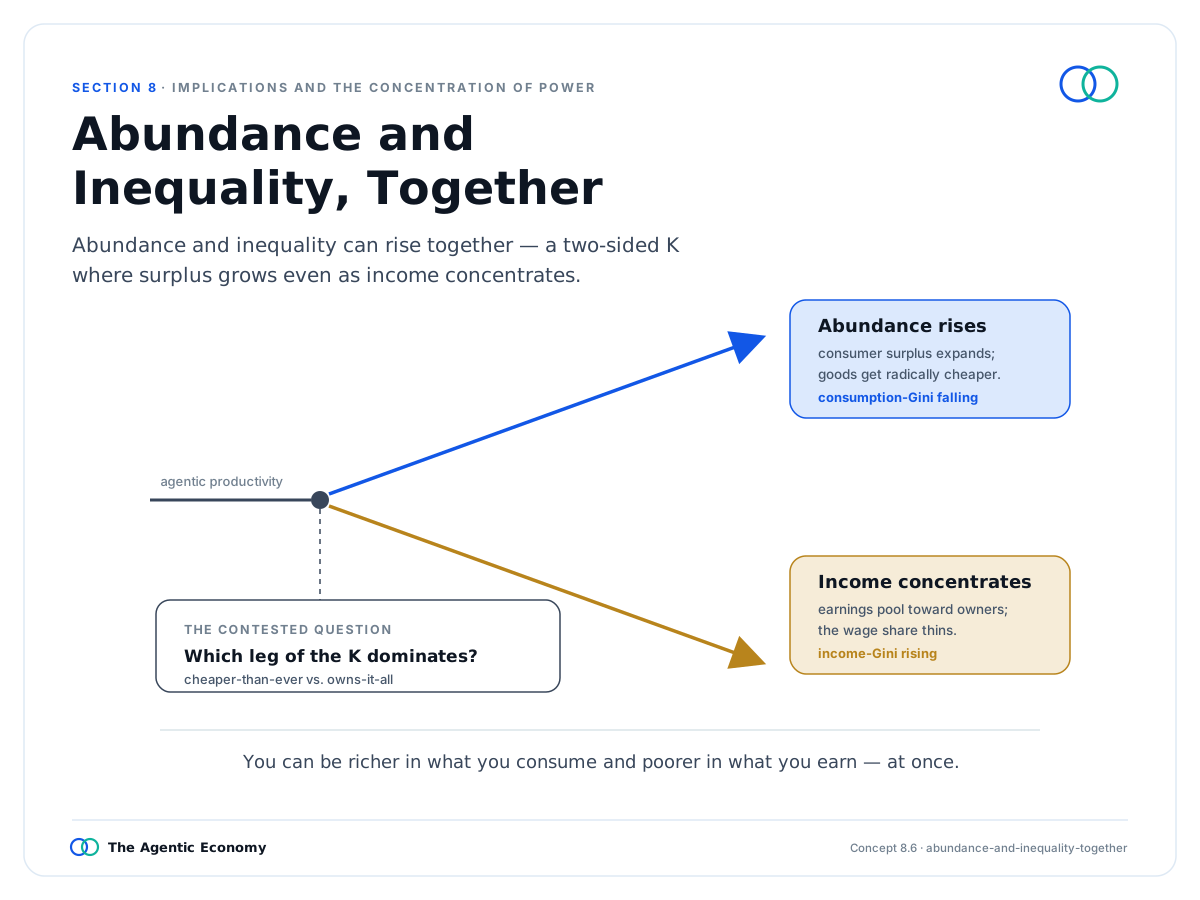
The ledger is two-sided, and the two sides can diverge. A world can become more unequal in income and ownership while becoming more equal in what people can actually consume and do. Which leg of the K dominates is not a mood or a prophecy. It is determined by the breadth of ownership and the design of fiscal policy. Broad ownership and a redistributive hand make the same automation a story of shared abundance. Concentrated ownership and a passive state make it a story of upheaval atop already-extreme wealth concentration.
The compression of the labor share, the concentration of power at the non-forkable chokepoints, and the geopolitics of weaponizable infrastructure are not three problems but one. The one thing they share is the question of who comes to own and govern the concentrating layers. Concentration is the default at exactly those layers, reinforced by the deepest regularities of platform economics.
Broadly shared abundance is achievable, but it must be built, through the distribution of ownership and the governance of the chokepoints, against the gravity that pulls the other way. The technology has, for the first time, made the better outcome genuinely constructible rather than merely imaginable. It has not made it automatic. How ownership might actually be distributed widely enough to matter, and how the chokepoints might be governed rather than captured, is the question the final part of this work must answer.