The Onchain Corporation
As artificial intelligence takes on more of the work of the firm, the firm itself needs somewhere new to live. A corporation whose labor is increasingly performed by software agents (agents that hold value, enter contracts, coordinate with one another, and act continuously across the world) requires an economic substrate on which all of that can actually happen. It needs a substrate where money is held and moved programmatically, where decisions and rules of execution are expressed in software, where coordination among agents and humans is recorded and enforced, and where the firm's external economic relationships are transacted at machine speed. That substrate is the onchain economy.
The agentic corporation and the onchain corporation are the same entity seen from two sides. The agentic side describes who does the work. The onchain side describes the form that work takes. This is the keystone of the entire treatise: the agentic economy is the onchain economy. The two are not adjacent trends that may one day intersect. They are one phenomenon, because an economy run by software agents must run on software money, software contracts, and software governance, or it cannot run at all.
This does not mean every corporation dissolves into a token-governed collective, and that distinction matters more than any other in this section. The future of the firm is hybrid, and two paths run in parallel.
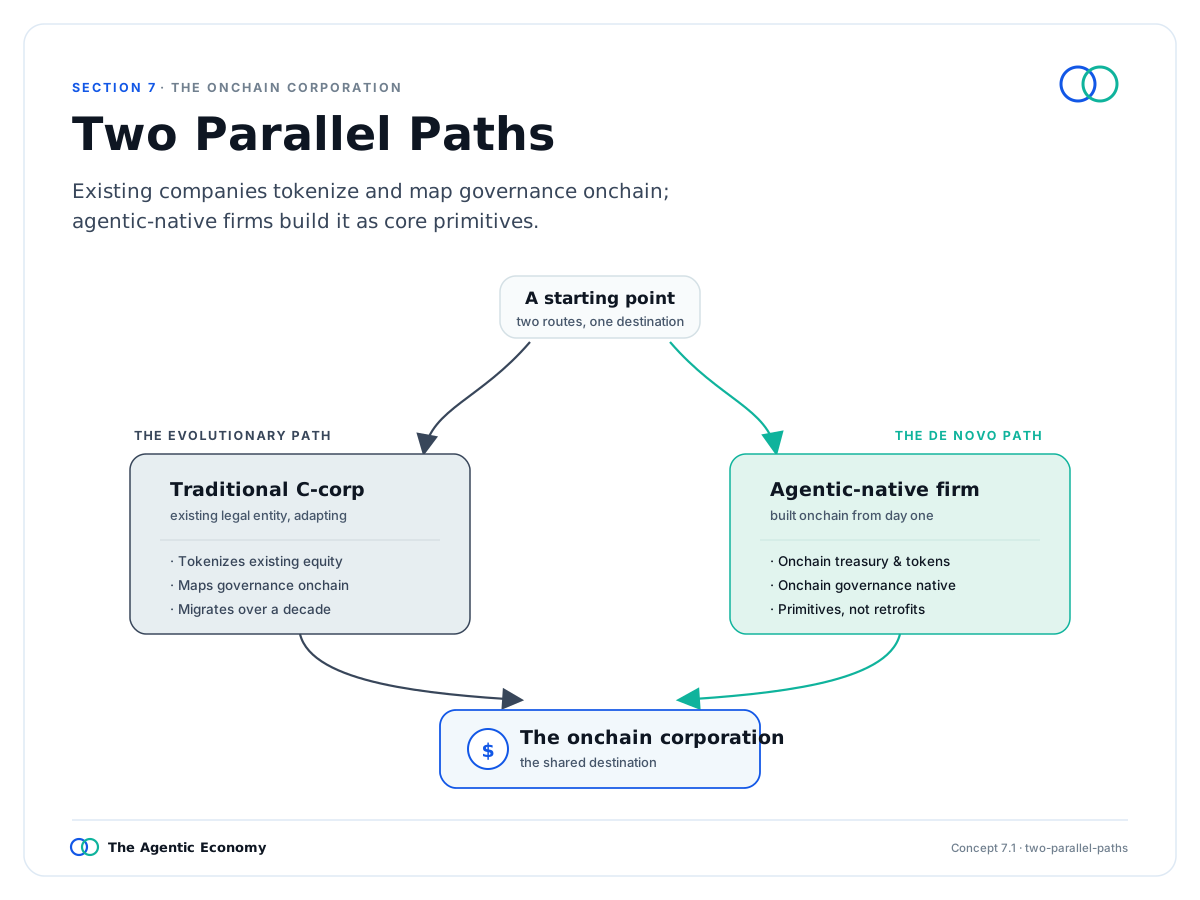
On the evolutionary path, existing corporations, including ordinary Delaware C-corporations, begin to tokenize their equity and to map their governance mechanisms onto onchain ones. They gradually relocate the operational substance of the firm to programmable infrastructure while keeping their familiar legal form. This is already underway: in the shifting posture of securities regulators, in share registrars and transfer agents piloting onchain registers, in the firms assembling the connective infrastructure, and in corporate-law amendments that permit a distributed ledger to serve as the stock ledger itself.
But it is a long arc, gated by the slowest-moving incumbents in finance. The statutes that define the authoritative register of ownership, the entrenched central securities depository through which public shares settle, the unresolved tax mechanics, the audit standards, and the rational caution of boards and their counsel all hold it back. This conversion will unfold over a decade or two, not a single cycle.
On the De Novo path, strongly agentic new firms build native from the start. They treat governance, treasury, and digital tokens not as features bolted onto a conventional company but as the core primitives through which the firm is operationalized from its first day. The two paths mirror what is happening on the supply side of software itself. Incumbents evolve their existing products into agent-consumable services, while new entrants build agent-native from scratch. The native builders, unburdened by legacy, demonstrate the model and pull the incumbents and their regulators forward.
Even the De Novo firm does not escape the law by being born in software. Legal personhood, limited liability, and the standing to contract, sue, and be sued are conferred by a sovereign, not by a deployment transaction. A system of smart contracts that has not been domiciled in a recognizing jurisdiction is, by legal default, an unincorporated association or general partnership. Its participants can bear unlimited personal liability, as a token-governed collective discovered when a court held exactly that. So the working De Novo firms incorporate through a thin statutory wrapper: the purpose-built DAO LLC and related vehicles that bridge code to an existing corporate-law container.
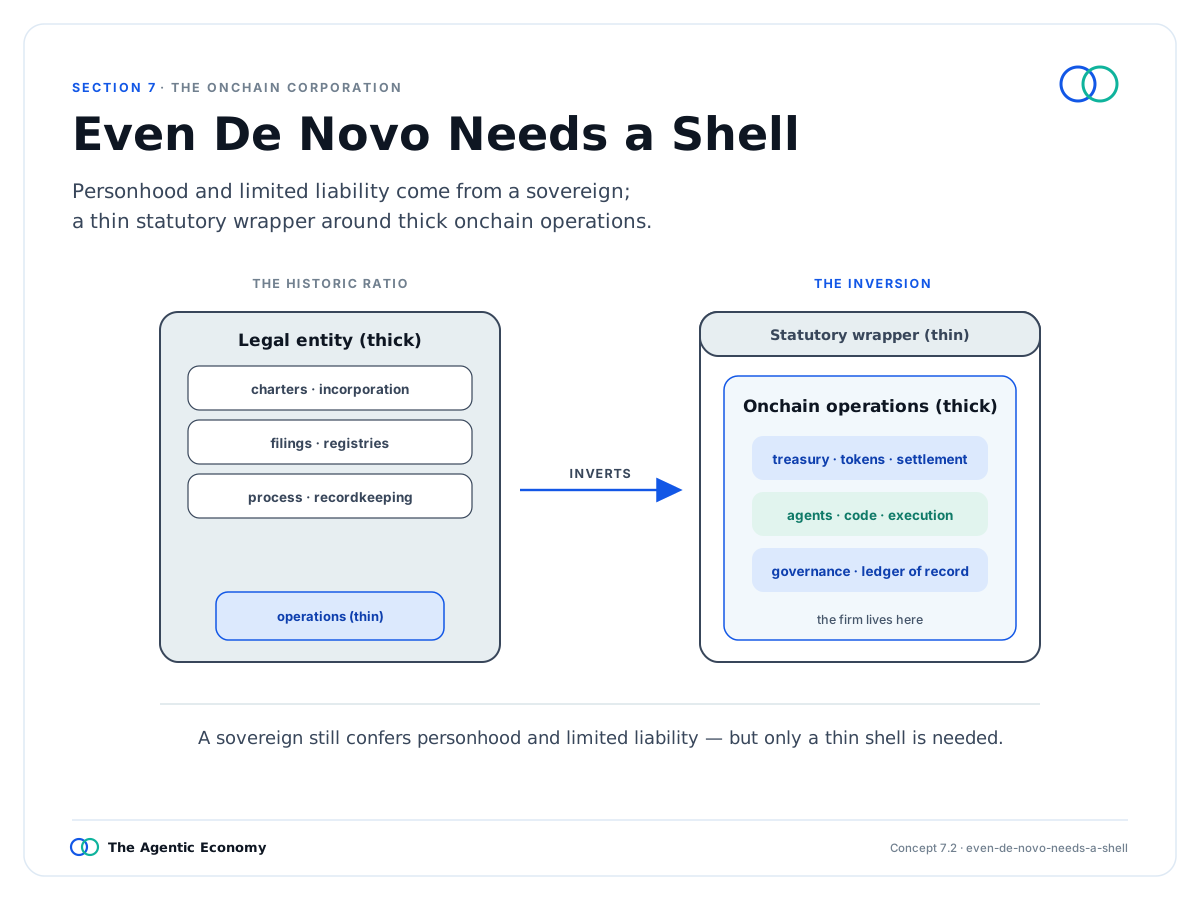
The novelty is not that the firm exists outside the law. It is that the ratio inverts. The legal shell becomes thin and near-formal while the operational substance (treasury, payroll, contracting, governance execution) lives onchain and thick. That is a genuine transformation in how a company is run. The sovereign's role in conferring its existence does not disappear.
The substance that fills these new forms is itself novel. The onchain corporation combines traditional governance (an incorporated, limited-liability container) with tokenized ownership: equity or digital tokens that convey contractual rights to revenue and income, to voting and participation, and to other forms of utility in the entity. It replaces non-digital infrastructure with programmable infrastructure: a treasury managed onchain under explicit policy, auditability that is continuous rather than periodic, and interoperability that is global by default.
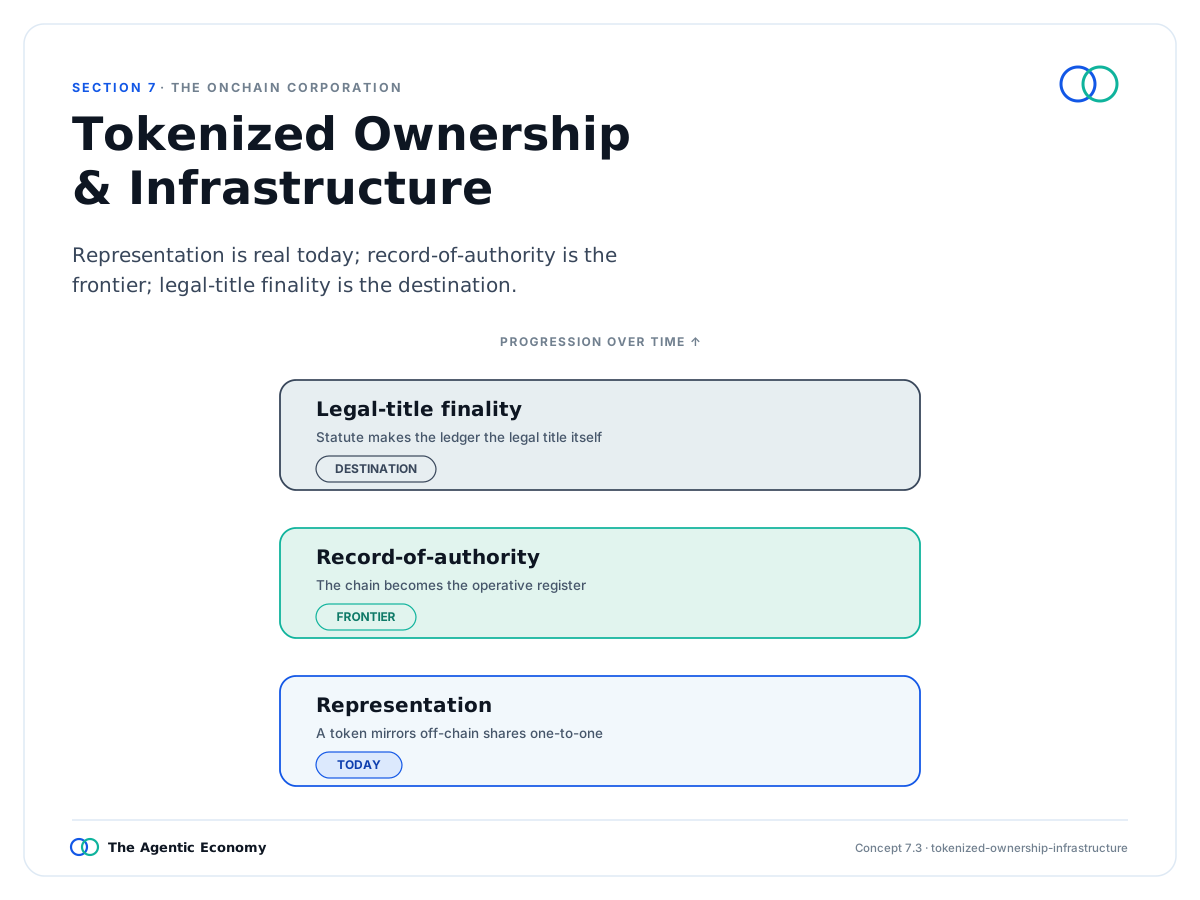
Three things must be kept in mind with this evolution. A token can represent a share today; that is live and real. Whether the chain is the record of authority (the legally operative register of who owns what) is an emerging, statute-dependent matter, advancing only as fast as corporate law makes the ledger the official register. And settlement with true legal finality of title, as opposed to finality of a token that mirrors a share, remains largely aspirational. Until the chain becomes the legal register, a tokenized share lives in two books at once. The unglamorous machinery (proxy voting and disclosure, dividends and tax withholding, lockups and holding periods, accredited-versus-retail transfer restrictions, regulated custody) is precisely where the work is hardest and the progress thinnest. Representation is present. Record-of-authority is the active frontier. Full legal-settlement finality is the destination. The three do not collapse into one.
The deepest change is in governance: as decisions within a firm come to be made by both humans and agents, the enterprise needs a single tamper-proof record that both can read, write, and act on with equal authority. Without it, governance fractures along the seam between human and machine. The cryptographically provable canonical ledger is that shared source of truth, the backbone that runs from the execution of an agent's action outward to token and equity holders and to the perimeter of the board itself.
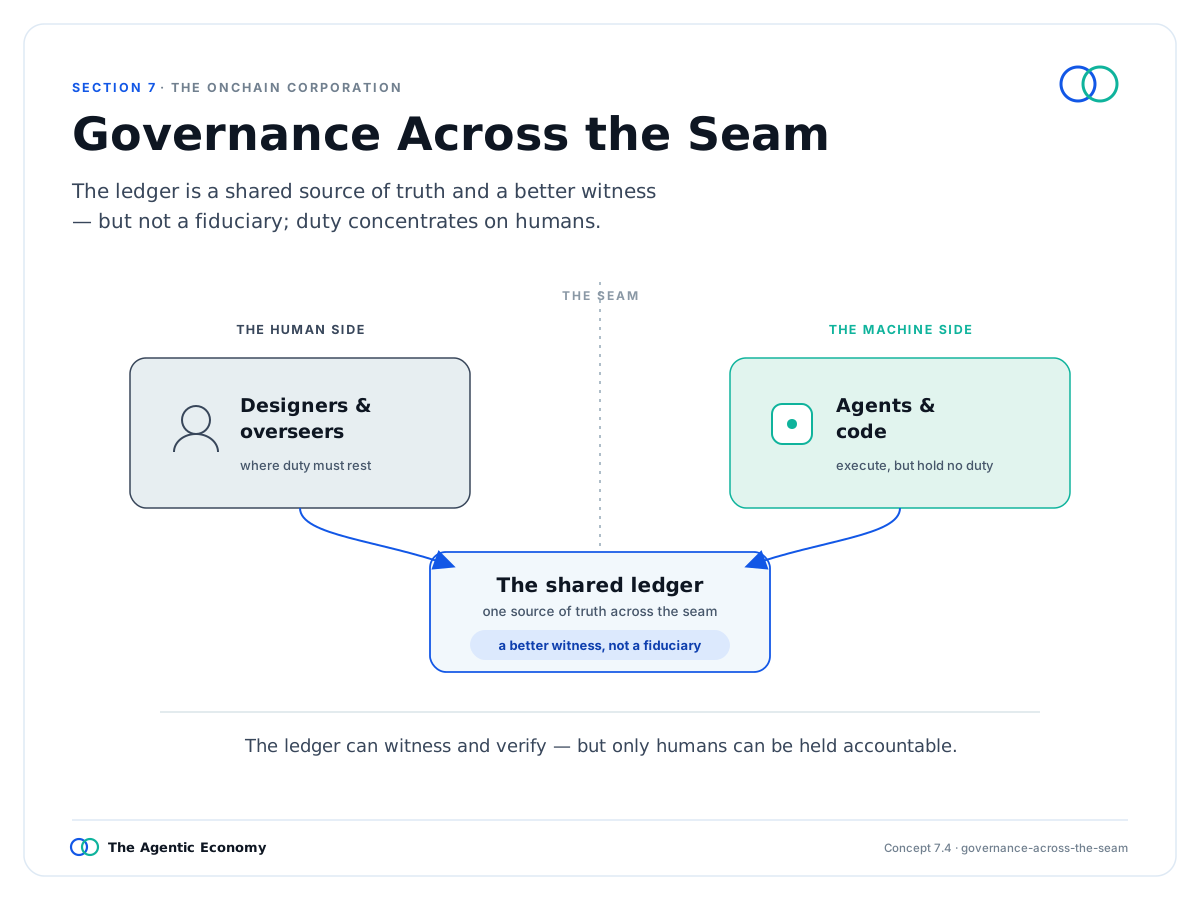
But the ledger's power has to be described for what it is. It establishes, permanently and verifiably, what happened, in what order, and by whom. That's a huge gain in provenance and non-repudiation, and it settles whole categories of factual dispute. What it doesn't establish is that an action was authorized, within the entity's powers, prudent, or loyal. A perfectly provable record of a self-dealing or unauthorized transaction is still a breach, and permanence can even lock a wrongful act in place. The ledger is a better witness, not a better fiduciary.
Fiduciary duty is a duty of persons. A machine can't hold it, can't be questioned on its intent, can't be disqualified for disloyalty, can't be personally liable. So when an agent makes or carries out a governance decision, the duty doesn't disappear. It lands on the humans who designed, configured, authorized, and were supposed to supervise the agent. Machine governance doesn't move accountability off humans. It sharpens it onto the designers and overseers, and it adds a duty to supervise the agent on top of the existing duty of care. "Humans in the governance loop" then becomes precise: humans hold the duty, the ledger holds the record, and agents act within bounded authority that humans delegated.
The same precision rescues the section's most evocative claim, that the contract becomes the program. A contract, at bottom, is a set of decisions and rules for carrying them out. Increasingly those rules are written in code and enforced by machines, between firms and agents and between agents themselves. In that sense the contract really does become the program. But code executes literally and completely, while legal contracts are deliberately incomplete. They rely on courts to read intent over literal text, and to apply the doctrines that make commerce workable: mistake, fraud, duress, impossibility, and the mandatory consumer, employment, and competition law that parties can't contract around.
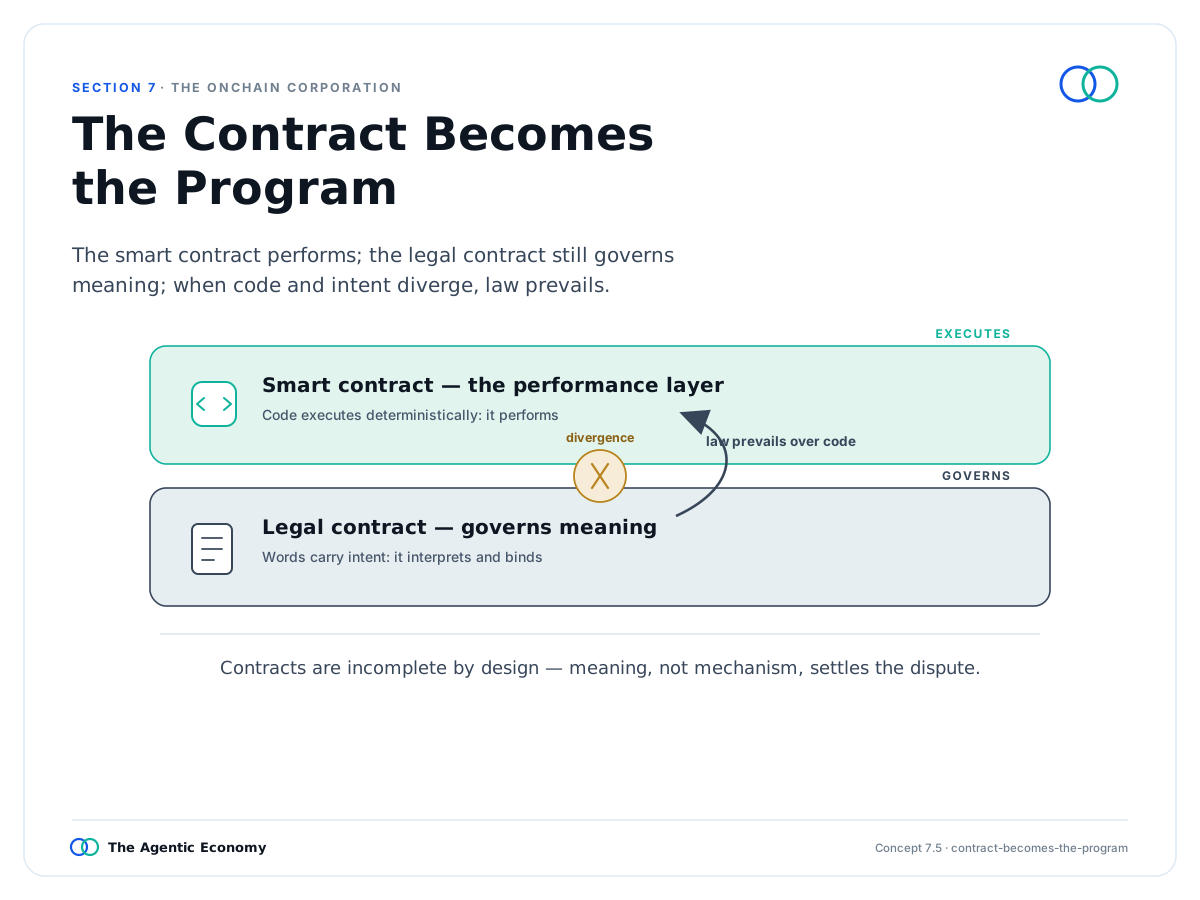
So the picture is two-layered. The program is the performance and settlement layer. It executes the agreement automatically on the high-volume, unambiguous path, which is most transactions by count. The legal contract stays the governing instrument for interpretation, defenses, and mandatory law on the rare path where code and intent come apart. The program automates performance, not meaning. The classic example is now a decade old. When a famous early smart-contract system was exploited, the code did exactly what it was written to do, and the community still treated the outcome as wrong and reversed it. Even the most code-native actors put the real judgment outside the bytecode when execution and intent diverge. The contract becomes the program in how it's performed. It stays a legal instrument in how it's governed.
This is why the onchain firm is best understood as integrity at the core and adjudication at the edges. The deterministic core handles the huge volume of low-ambiguity activity (transfers, payments, vesting, simple conditional logic) with an automaticity and auditability no human back office can match. For that majority of cases, trust really is minimized. The edge handles the contested minority: oracles that bring in offchain facts, adjudication that resolves disputes, and human override that can step in when the core produces a result that's right in the code but wrong in the world. That edge is re-intermediated, not dis-intermediated. An oracle is a trusted party for the fact it reports. An adjudicator has to be run by someone. An override key that can reverse the core is, by definition, a point of centralization, capture, coercion, and compromise. Whoever holds the override, in the end, holds the firm.
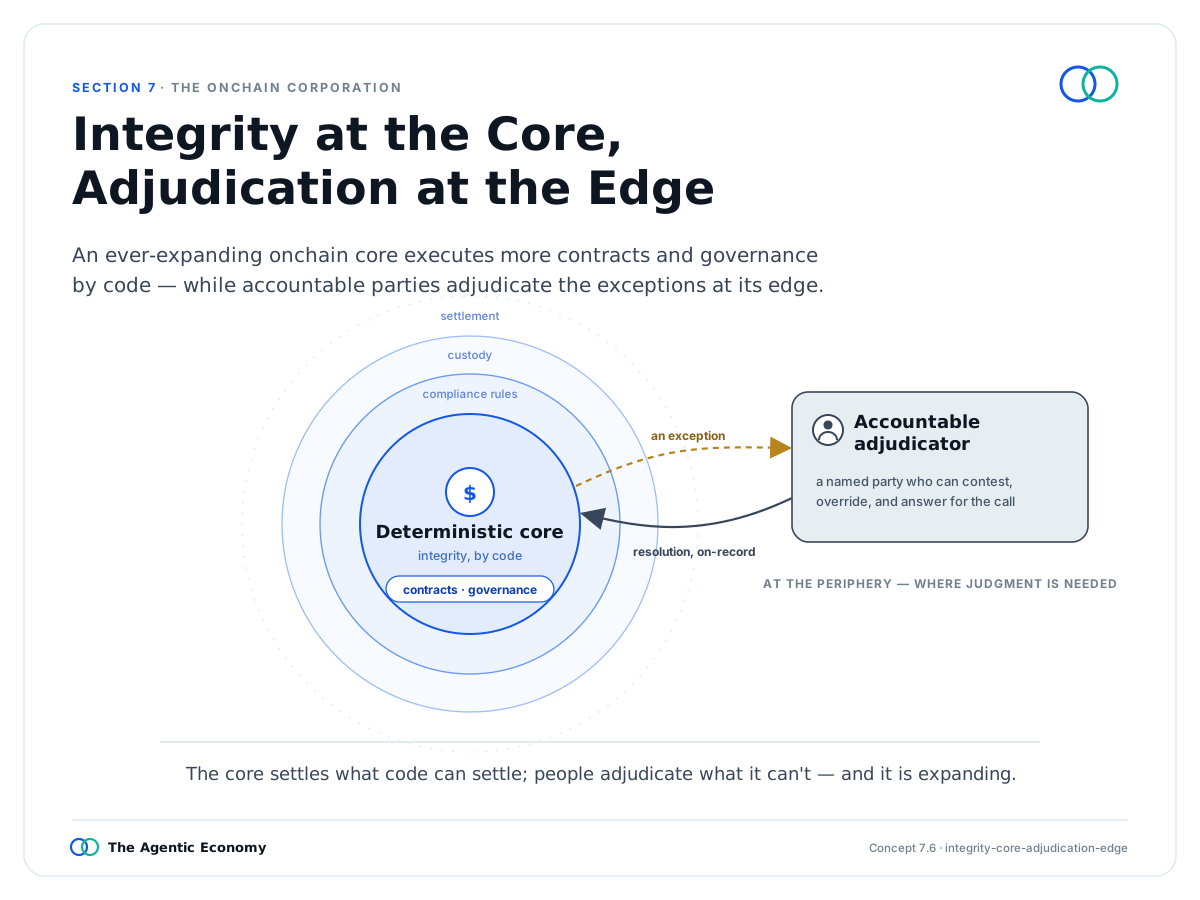
The win isn't getting rid of intermediaries. It's turning intermediation into something transparent and contestable: an override that's multi-party, time-locked, and on the record rather than a silent administrative key; an adjudication layer whose rules and incentives are visible; oracles whose sources can be checked. Integrity at the core, accountable intermediation at the edge. That hybrid is the real architecture of the evolving firm. It's more honest, and more robust, than either a fantasy of pure trustlessness or a defense of the opaque intermediaries it replaces.
Two cautions complete the picture. Onchain governance isn't automatically more democratic than the cap table and proxy process it replaces. Token-weighted voting is plutocratic by design. It concentrates power in large holders and insiders, suffers chronically low participation, and opens new attack surfaces of vote-buying and governance extraction, a concentration risk the next part of this work takes up directly. And the timeline shouldn't be oversold. The direction is real and the substrate is being rebuilt, but converting the incumbent corporation is a decade-scale project, gated by the most conservative institutions in finance.
The shape of the destination isn't in doubt. The firm takes on a new material form: money, decisions, coordination, and outside economic relationships all expressed in software, wrapped in a thin legal shell conferred by a sovereign, recorded on a provable ledger that serves as the governance backbone across the human-machine seam, with contracts performed by programs and governed by law, and integrity at the core balanced by accountable adjudication at the edge. Some firms get there by evolving and some by being born there, and the two journeys run in parallel. But the endpoint is the same, and it's the one the whole argument has been building toward: the agentic corporation and the onchain corporation are one and the same, because the agentic economy is the onchain economy.