The Supply Side: From Subscription to Consumption
The agentic economy needs a supply side. It needs a universe of services that agents can call, hire, and pay. That supply side forms in two waves. The first wraps what already exists. Software, data, and web services expose themselves to agents through command-line interfaces, machine-readable wrappers, and skills. They are packaged so an agent rather than a human can invoke them, and increasingly metered and priced for that machine consumer. The second wave builds what did not exist before: purpose-built specialist agents that go deep in a domain and sell their work into the market. How that market organizes itself (discovery, identity, the labor market for agents-as-a-service) is the subject of an earlier part of this work. The concern here is the economic model, where the deepest break with the past occurs. That break is simple. The unit of value shifts from access to work, and that single shift reprices the software industry.
For three decades the dominant business model of software has been the subscription priced per seat: a recurring fee for access to a tool a human sits in front of. The agentic economy dissolves the seat. The consumer is no longer a person occupying a license but an agent performing a task, and what gets bought is not access but the work itself. What dies is the seat as the axis of pricing, not subscriptions as such. The meter moves from "how many people may log in" to "how much work was done."
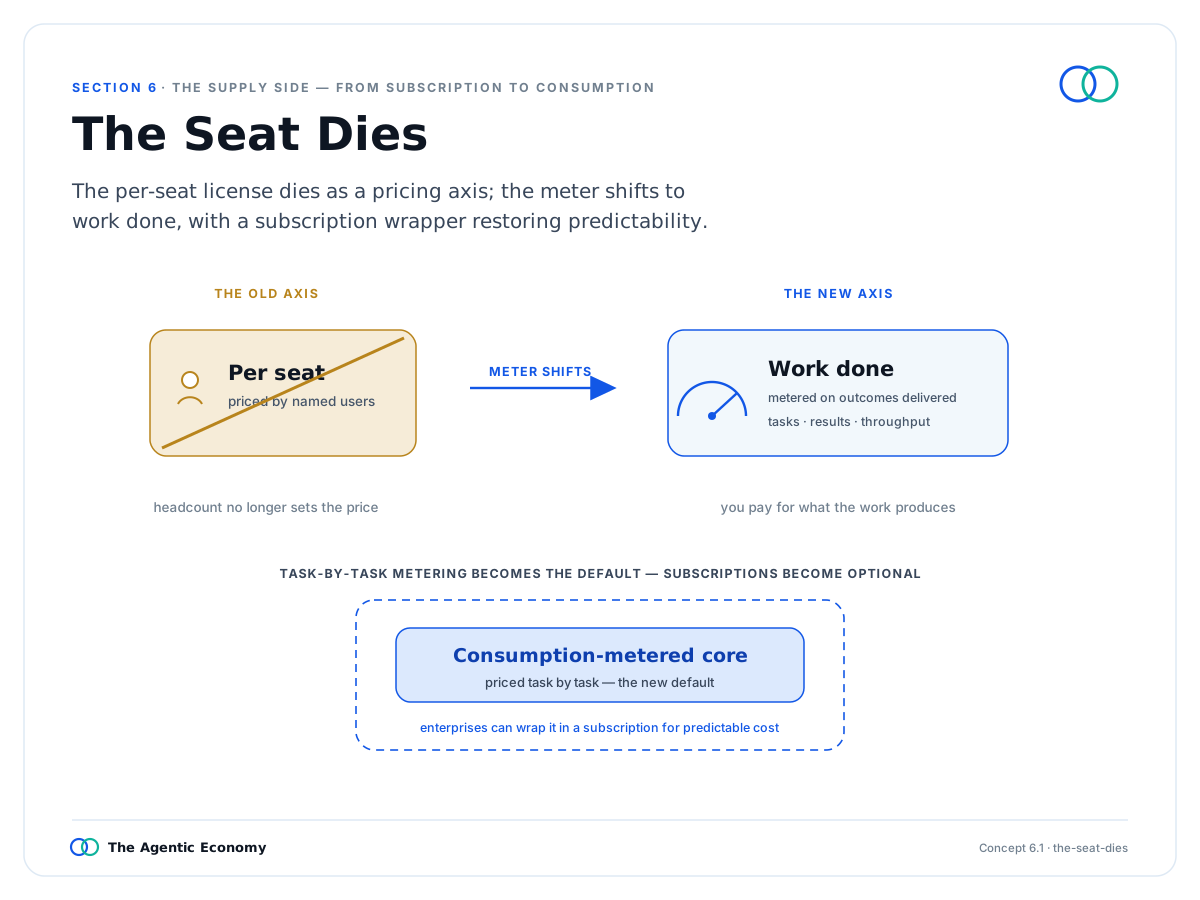
Around that new unit, commercial structure re-forms in several shapes at once. Pure consumption pricing suits spiky and exploratory work. Subscriptions with allocated usage (a committed spend that includes a budget of work units, with overage beyond it) restore the budget predictability that finance and procurement demand. Outcome-based pricing applies where the outcome can be cleanly defined and measured. These are not competing predictions but a pluralistic equilibrium. The forces usually cited against consumption pricing (the preference for forecastable costs, the difficulty of attributing "work delivered," the volatility that capital markets penalize in pure-usage revenue) are precisely the forces that produce that pluralism. The seat dies. The wrapper that restores predictability around the new unit of work survives in its place.
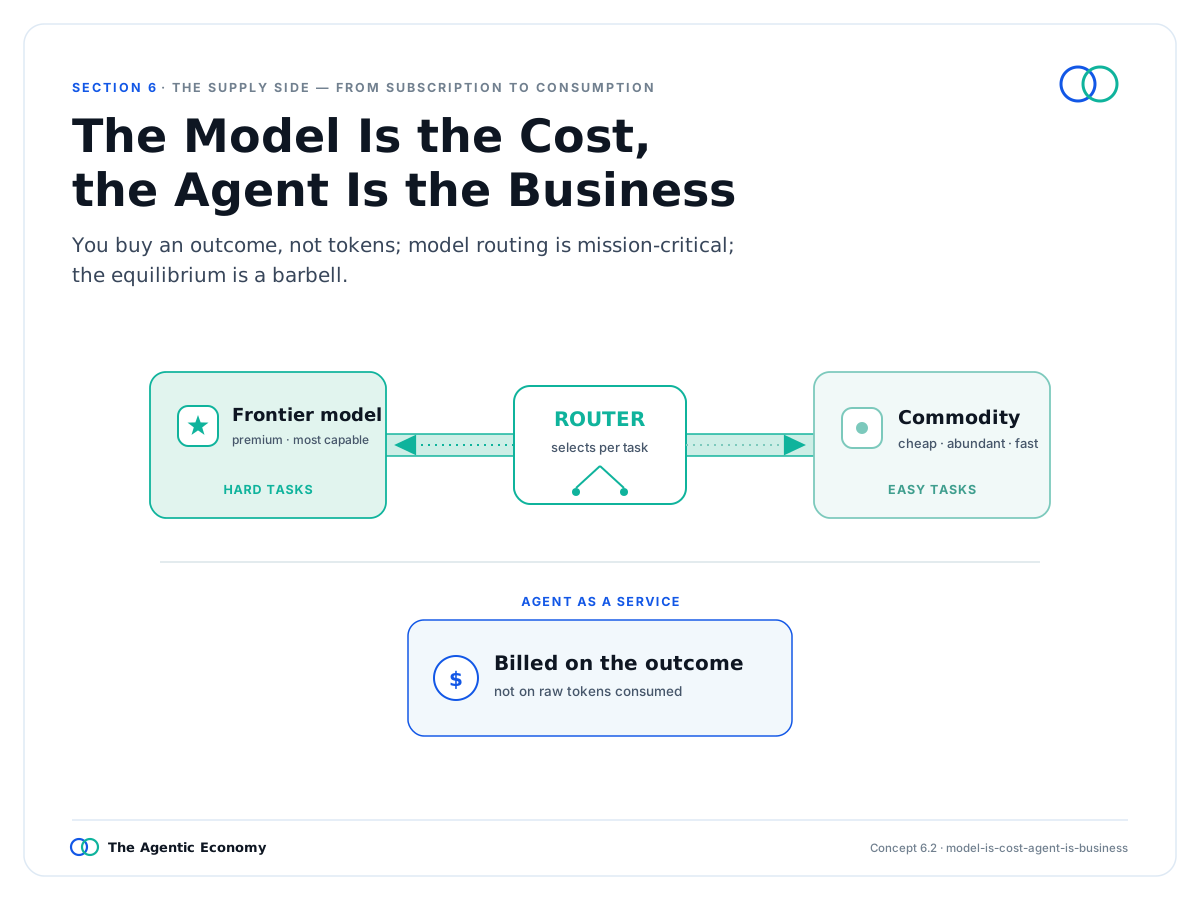
The same logic runs one layer down, into the relationship between the agents that do the work and the foundation models that power them. This is where value migrates. As specialist agents proliferate, the buyer increasingly purchases an outcome from an agent rather than tokens from a model. The agent absorbs the cost of intelligence as a cost of goods, arbitraging across competing foundation models to render the work as cheaply as quality allows. This is no longer theoretical. The machinery already exists and is maturing fast. Model routers (a layer that directs each request to the most appropriate model on cost, latency, and quality) have moved in a single year from optional tooling to mission-critical infrastructure. A large share of enterprises now run several models in production, and routing is reported to cut costs by substantial margins while preserving quality. The incentive to route is enormous because the price spread across the model menu is enormous. The cheapest production models cost a tiny fraction of a cent per million tokens. The most capable frontier models cost orders of magnitude more. The spread is wide enough that sending a simple task to an expensive model is simply waste.
Around this has grown an entire discipline of cost governance, with a new vocabulary to match. "Tokenmaxxing" names the failure mode of optimizing for tokens consumed rather than value produced. The controls follow, imposed by large enterprises as their internal AI bills ran toward the billions. The unit economics of agentic work are not a distant abstraction. They are being forged right now, quickly, as the field moves from early experimentation toward the mainstream.
What that forging implies is captured in a phrase: the model becomes the cost line, and the agent becomes the business. Value tends to accrue not to the raw intelligence but to the layer that owns the customer relationship, the proprietary context, the workflow, and the accountability for the outcome. This is the same pattern by which prior platform waves saw a commodity input sit beneath a value-capturing layer above it.
However, there is a serious counter-case. The owners of frontier models are not passive commodities-in-waiting. They retain real pricing power on the capability frontier (the genuinely hard fraction of tasks where one model is materially better and routing collapses to "use the best") and they integrate upward into the agent and application layers, owning the model and the customer at once. The likely equilibrium is a barbell: a large commoditizable middle of work, arbitraged across interchangeable models by specialist agents who capture the margin there, and a frontier tail where model owners keep their rents and compete directly at the agent layer. The line between the two moves upward as models improve. Yesterday's frontier becomes today's commodity, continually feeding the arbitrageable middle even as a new frontier opens above.
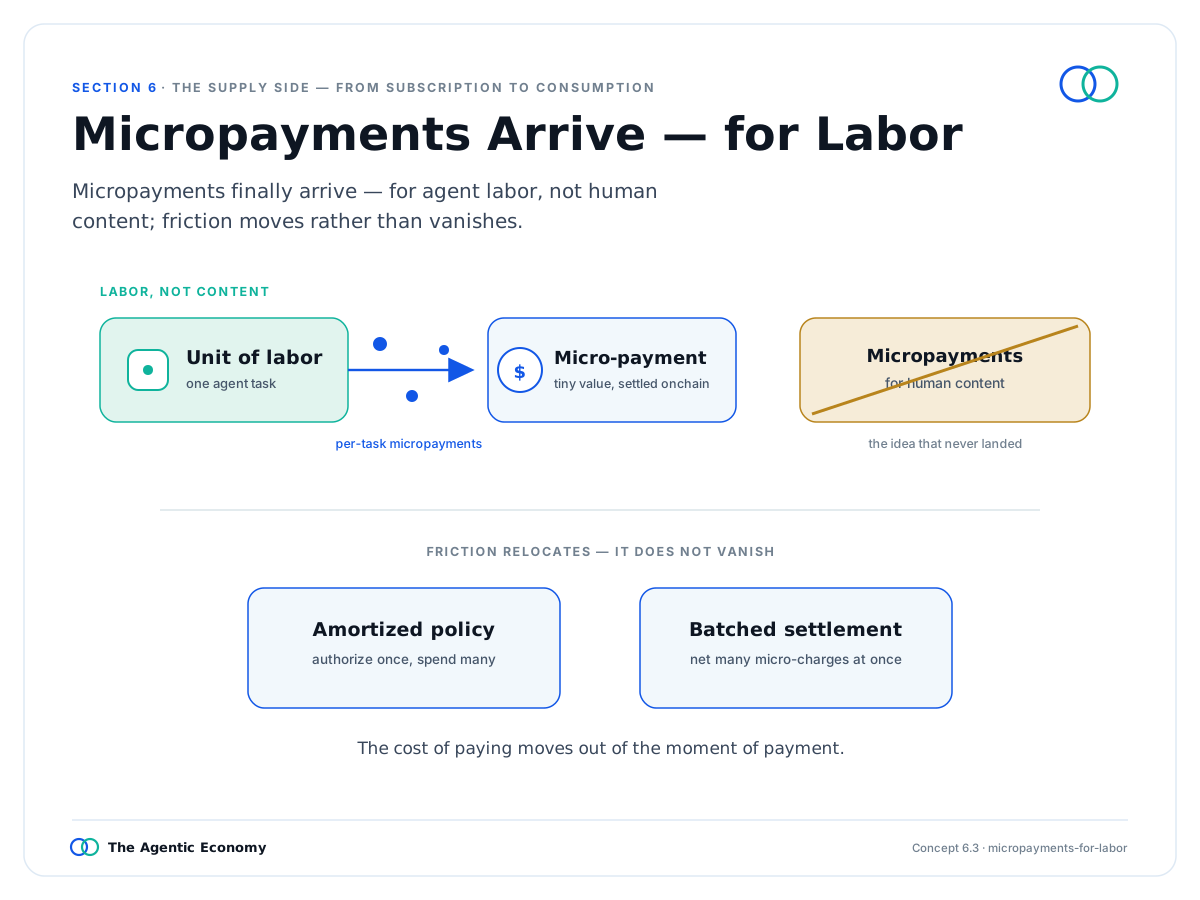
Beneath the pricing of work sits the settlement of it, and here an old dream finally comes true. The micropayment, the sub-cent charge for a small unit of value, was promised for the consumer internet for thirty years and never arrived. The usual explanation is that settlement was too expensive. That was only half the reason. The deeper killer was the human mental-transaction cost. People hate having to decide, over and over, whether a thing is worth a penny, and the cognitive friction of the decision dwarfed the price.
The agentic economy removes both halves at once. Settlement on programmable rails clears fractions of a cent cheaply, and the consumer is now a machine that has no instinct to deliberate over a penny. So micropayments arrive at last. Not for content access, the use case that always failed, but for labor: the metered exchange of small units of work between agents. The friction moves rather than vanishes. The "is this worth it" decision does not disappear; it is re-encoded in software as a budget policy and a value-of-work estimate, and metering millions of sub-cent events carries its own accounting and observability overhead. But that cost is amortizable (one policy governs millions of decisions) and aggregatable, since the micro-events can be netted and batched rather than each settled individually. The per-event cost falls far without reaching zero. The dominant historical barrier collapses, and a new, far lower, amortizable cost takes its place, and is what makes labor at the granularity of a penny finally economic.
When the consumer of a service is a machine rather than a human with finite attention, the services themselves begin to change shape. A growing class of them, including consumer web services, will refactor to assume that their primary user is an agent: machine-callable, priced per call, stripped of the interface, the funnel, and the advertising that existed to capture and monetize human attention. The addressable market for such a service expands enormously, because an agent can consume thousands of services in parallel, around the clock, freed from the attention bottleneck that capped human consumption.
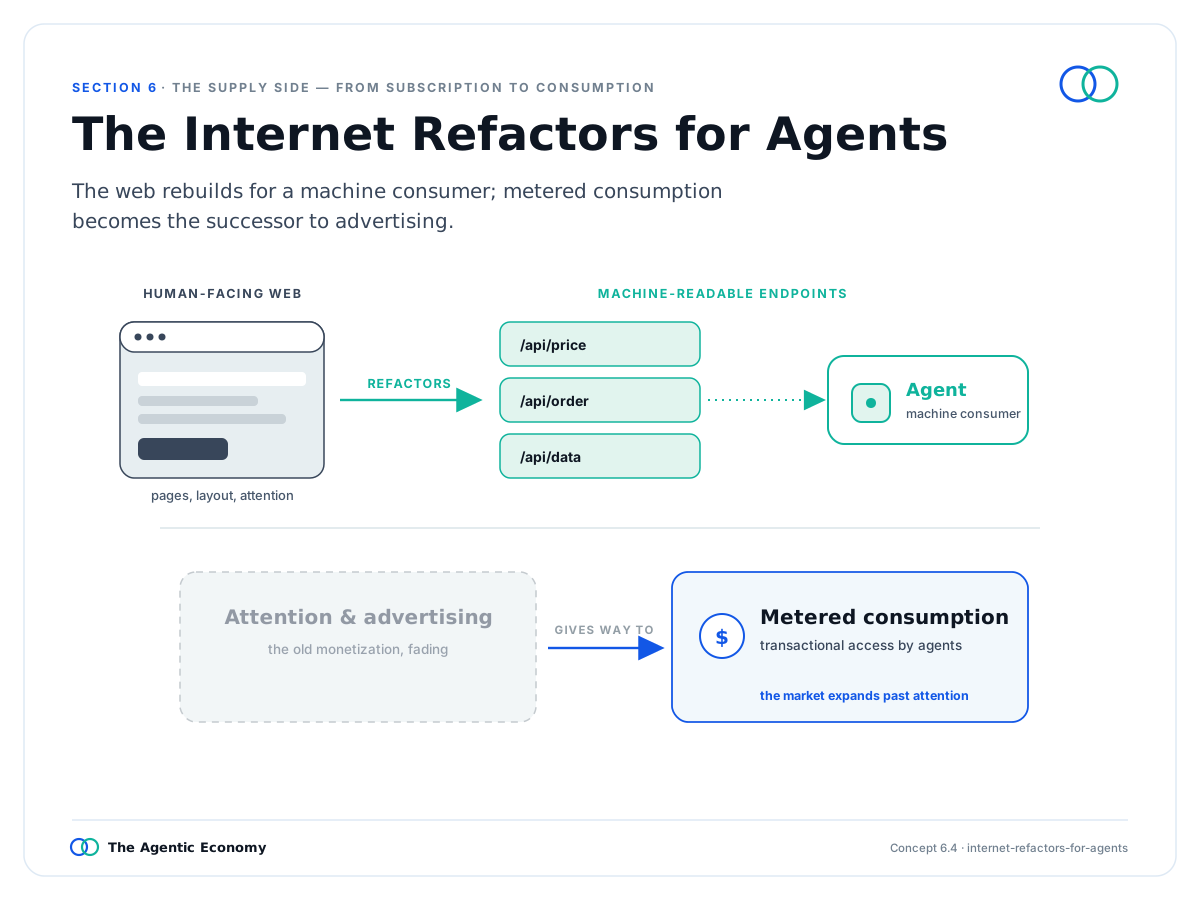
The refactor will be partial and gradual before it is complete. Incumbents will bolt an agent-readable layer onto their existing human interface long before they tear the interface out. Many will resist, walling agents out or admitting only their own, because the present internet is a multi-hundred-billion-dollar two-sided market they have every incentive to defend. And it opens a genuine hole. Attention was the very thing the free, ad-funded web sold. A machine consumer with no attention and no susceptibility to advertising removes the revenue model that funded much of the internet. The hole and its repair are the same event.
When agents disintermediate attention-based monetization, the natural successor is direct, metered payment for the service the agent consumes: precisely the consumption-and-micropayment model the rest of this section describes. Agentic consumption pricing is the successor revenue model to attention and advertising.
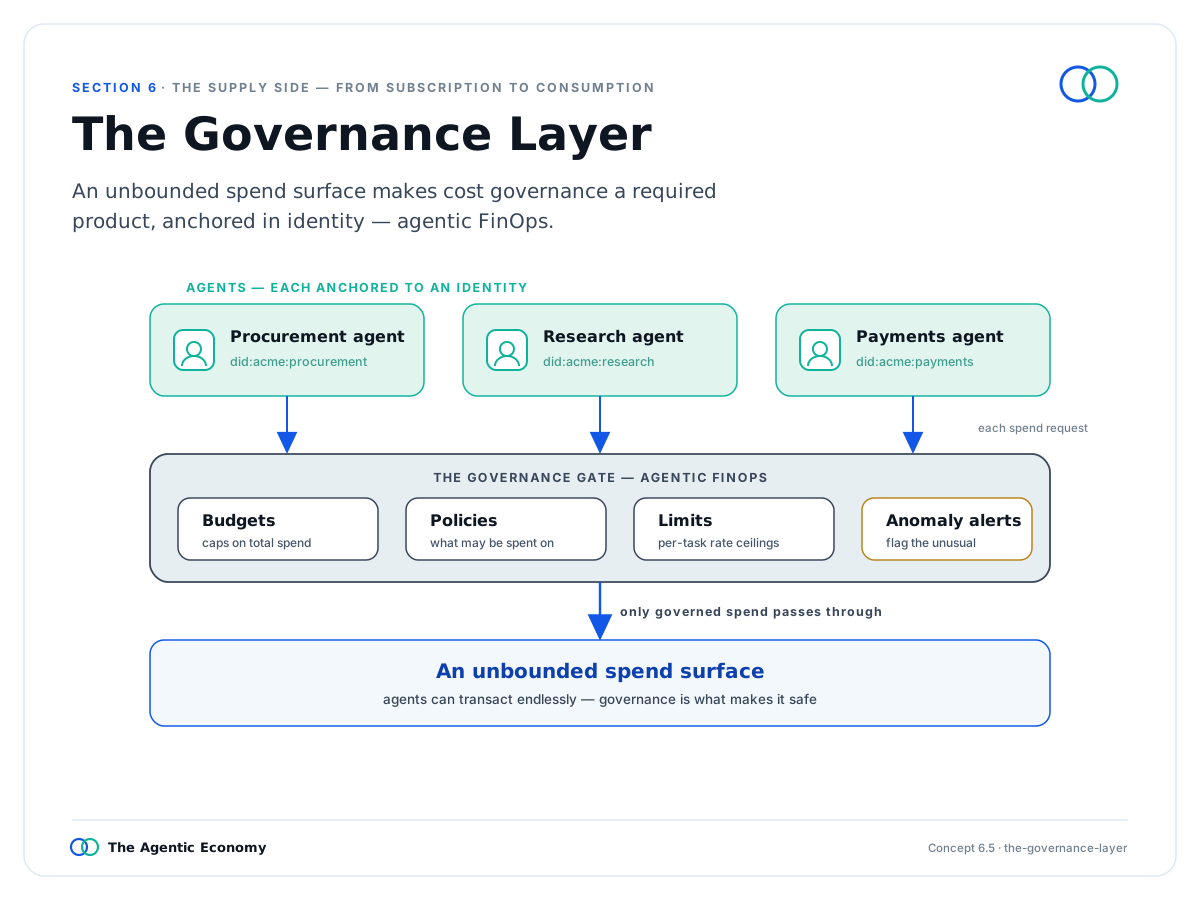
None of this works without a layer; the optimistic story tends to leave out, and recent experience has already shown what its absence costs. If work is metered and agents can hire other agents, tools, and models in turn, the surface over which money can be spent becomes effectively unbounded. The agent running up the cost isn't the one who has to pay it. A machine has no instinct to flinch at spending. Caught in a bad loop or an over-eager plan, it can run a very large bill very fast. Big companies have already watched internal AI usage blow past budget, and responded with hard per-tool caps and centralized controls.
So the agentic economy needs a governance layer just to function at all: spend caps and budget rules, allowances that pass down the chain of delegated authority, real-time metering, anomaly detection, and human sign-off for consequential actions. Think of it as the agentic version of cloud cost controls and the corporate-card limit. It becomes a product category in its own right. Far from undermining the thesis, it completes it. A priced, machine-callable service has to expose policy, identity, and authorization too. The micropayment rail is incomplete without a budget-authority rail beside it, anchored in the same accountable identity described throughout this work.
One more point, about pace, because two clocks are easy to confuse. The cost-and-capability clock is genuinely fast. Token costs have fallen by orders of magnitude, cost-control techniques are maturing in months, and the leading edge (software development above all, and other digital-native work) is going mainstream quickly, because it has high trust, easy integration, and measurable results. The enterprise-adoption clock for consequential and regulated work is slower, and mostly runs independently of the first. It's gated not by unit economics but by integration into systems of record, security and compliance review, the immaturity of the governance layer just described, the question of who's liable when an agent errs, and procurement cycles that themselves resist the new pricing.
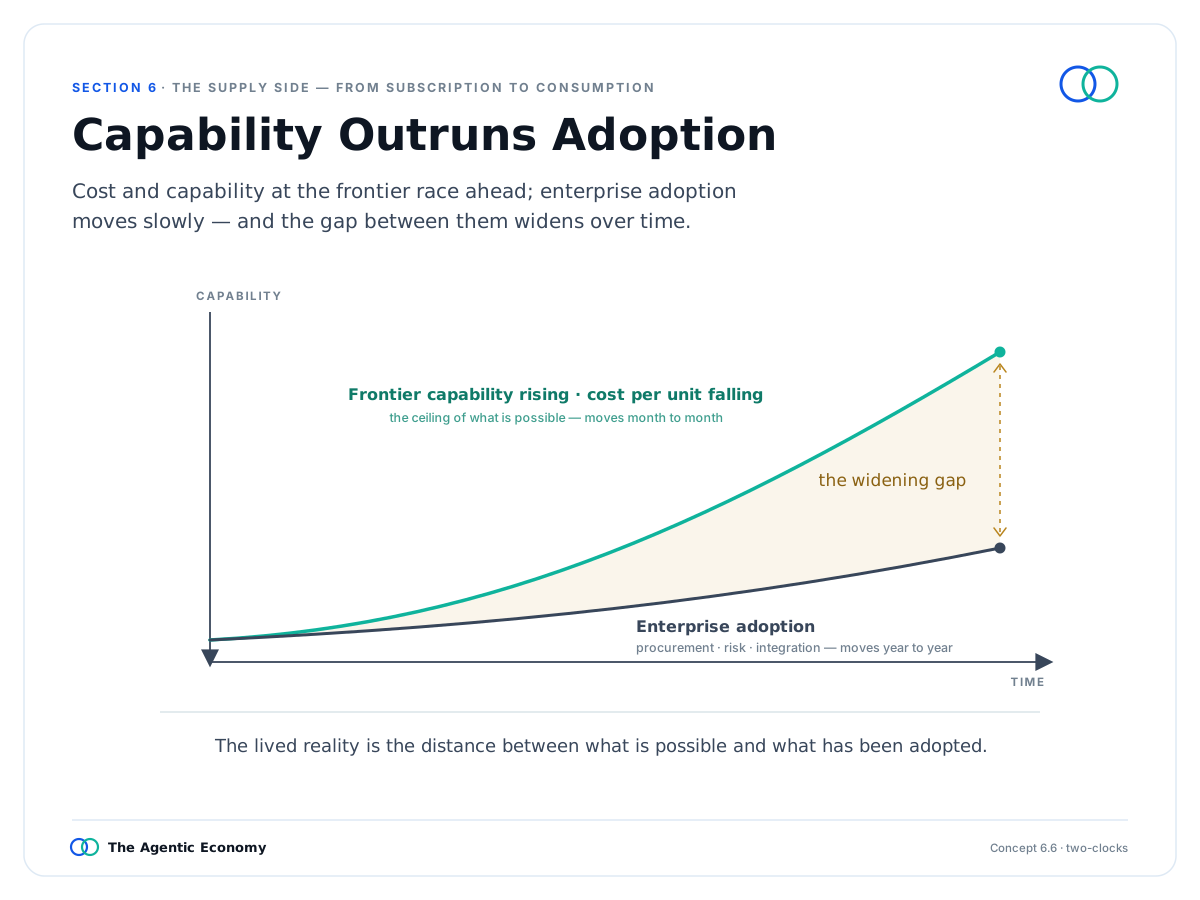
Both are true at once. The direction is fast and the enabling economics are arriving fast, while broad adoption across consequential domains is a multi-year process, gated unevenly. But the direction isn't in doubt. The unit of value shifts from access to work. Value moves to the agent that owns the outcome, while intelligence itself becomes a commodity across most tasks. Micropayments finally arrive for labor, because the buyer is finally a machine. The internet starts to reshape around its new agentic customer. And a governance layer rises to make autonomous spending safe. It's a pluralistic, governed regime, fast-arriving but unevenly gated: not a clean, sudden flip, but a real repricing of how the economy's work gets bought and sold.