The Civic Vision
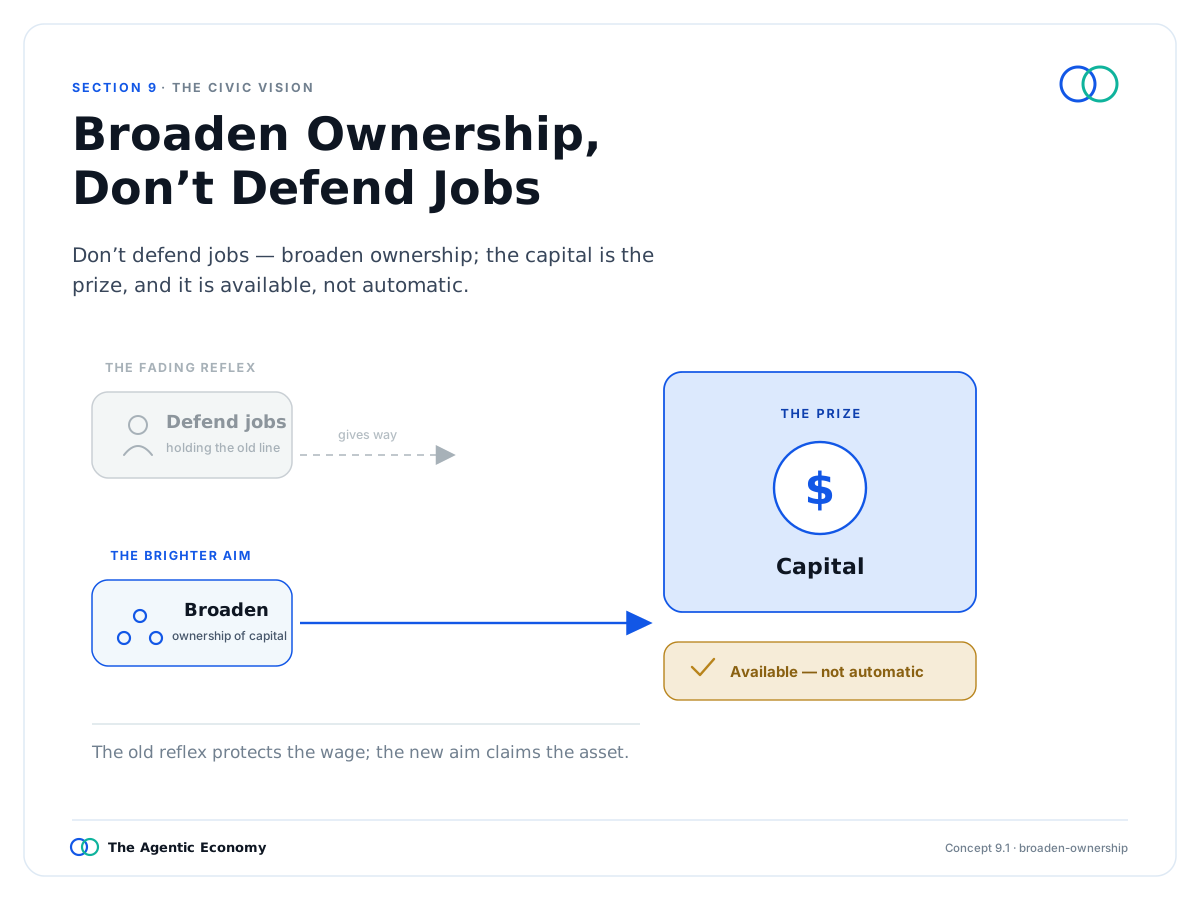
The agentic economy breaks the link between labor and a share of output. The answer is not to defend the jobs. It is to broaden the ownership of the capital that is accreting the value: the agents, the models, the infrastructure, and the firms. That is the resolution toward which this entire argument has pointed, and it is genuinely available. The same onchain architecture that, left to its defaults, concentrates ownership at a handful of chokepoints can instead distribute ownership, outcomes, and governance more widely than any economic order in history.
Begin with the lineage, because it sets the scale of what is possible. The joint-stock corporation was a profound social technology. By letting strangers pool capital and share in the long-term outcomes of an enterprise, it made possible capital markets, the corporation as a legal person, and the modern machinery of banking and exchange, and it widened participation in enterprise far beyond the merchant and the sovereign.
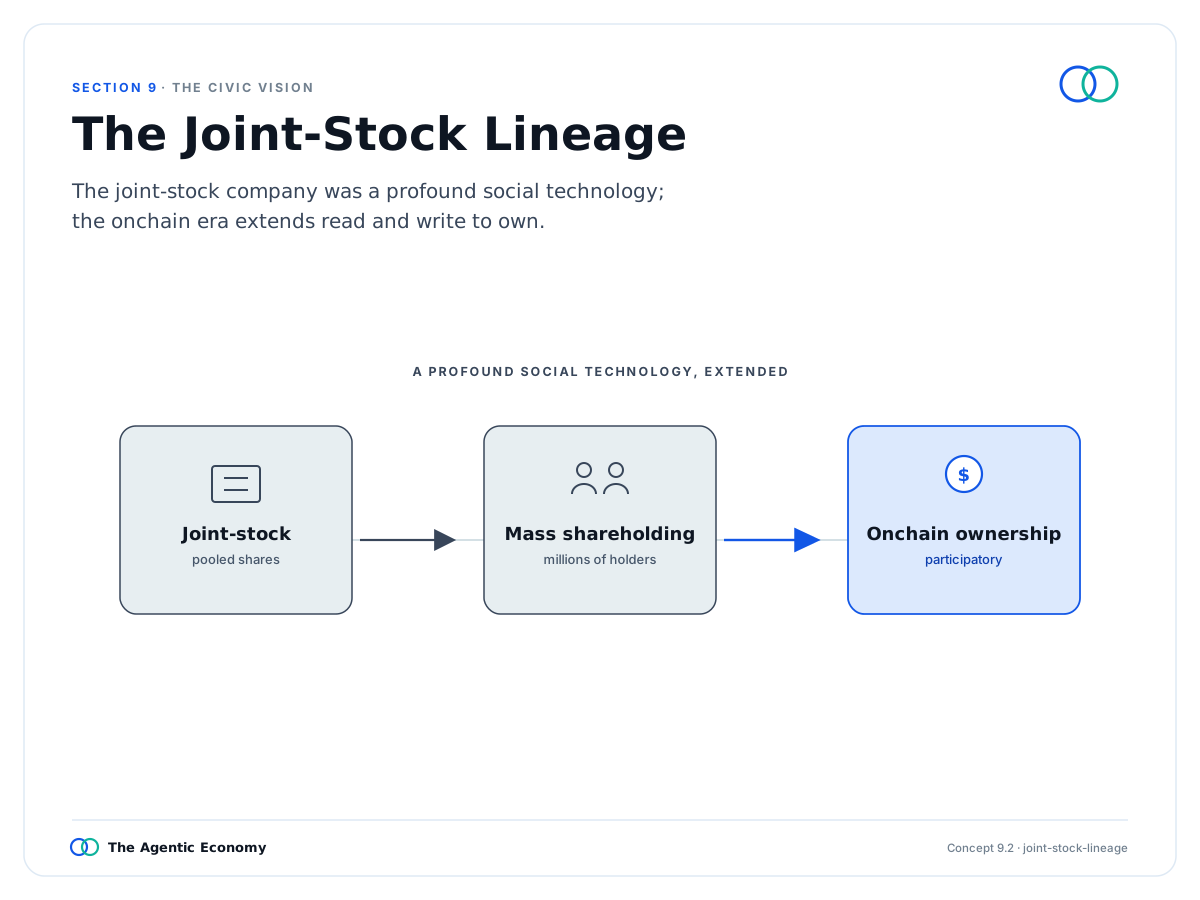
The onchain economy extends that lineage and, in principle, surpasses it. For the first time the material exists to distribute not only the capital but the governance and the upside of enterprise to vast numbers of people at near-zero administrative cost, with digital tokens as the building block. This is what the Web3 movement reached for in its slogan of read, write, own: platforms whose users share in their governance and economic benefit rather than merely supplying the attention and data that others monetize. The aspiration is old and serious. What is new is that the cost of acting on it has collapsed.
It is tempting to claim that earlier movements for broad ownership, syndicalism, the cooperative movement, guild socialism, failed only because they lacked the coordination technology that onchain rails now supply, and that the ideals were right and merely awaited the infrastructure. That claim is too flattering to the tools and false to the history. Those movements were not defeated by a logistics problem. They were defeated by power, by capital, by employers, and by the state, through suppression, hostile law, and force.
The cases that succeeded prove the point from the other side. Mondragon's tens of thousands of worker-owners, the credit-union and mutual-insurance movements, large consumer cooperatives, all achieved distributed ownership and governance at real scale, for decades, with nothing more exotic than sound legal form and durable institutions, and no blockchain at all.
Furthermore, in our evolved systems of state-led market capitalism, the shift is not necessarily towards deeper democratization over industry itself, but instead a new vision for stakeholder participation, with broader societal ownership in the highly concentrated and disruptive technology platforms that are concentrating the greatest amount of capital.
So the claim is narrower and sturdier. Onchain rails lower the coordination and transaction costs of broad ownership and strip out the gatekeepers that once stood between ordinary people and a stake. That is a real and meaningful contribution. But they do nothing about the power asymmetry that actually killed the historic movements. The technology makes distribution cheaper and more feasible. It does not make it happen. Politics still decides that.
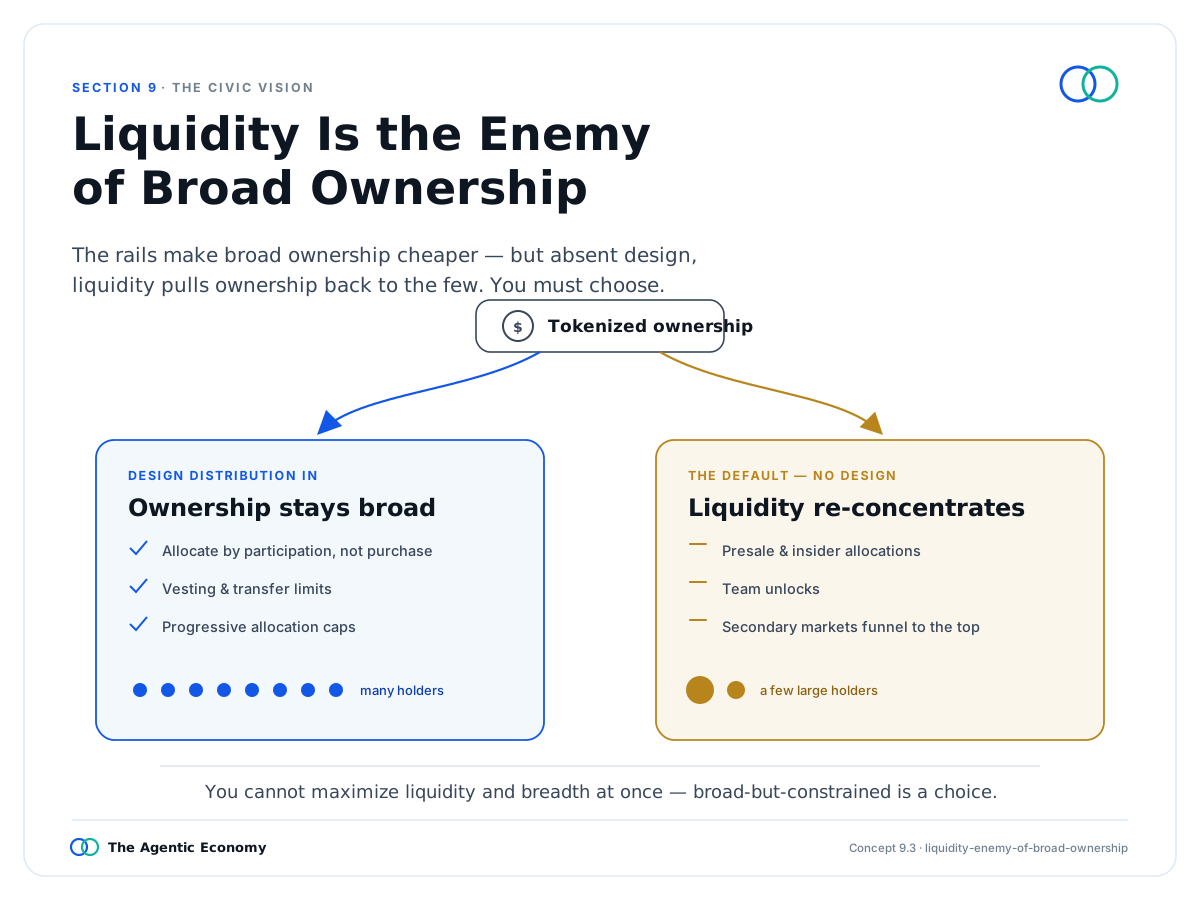
And the default, absent design, is re-concentration. The empirical record of token ownership is sobering. Presale and insider allocations, team unlocks, and above all secondary markets that funnel transferable tokens back to the largest holders the moment they have value have made onchain ownership at least as concentrated as equity, sometimes worse. One-token-one-vote governance is plutocracy by construction.
Liquidity is the enemy of broad ownership. So the claim that the architecture can be distributed is true and nearly trivial. The question is whether distribution is designed in against the gravity that pulls the other way. That design is possible, but it requires naming mechanisms and accepting their costs. Allocate ownership by participation and contribution rather than purchase, so the people who use and build a system come to own it. Use vesting and transferability constraints that blunt secondary-market re-concentration. Set progressive caps on allocation. Each of these fights capital's pull, and each carries a real tradeoff.
There is a deeper trap the optimistic version glosses: distributing ownership is not the same as distributing power. Broad fractional ownership routinely coexists with no governance influence at all. The ordinary retail shareholder is the proof, and onchain the gap can be worse, through founder super-voting, foundation control, low-turnout delegated governance, and whale-dominated voting.
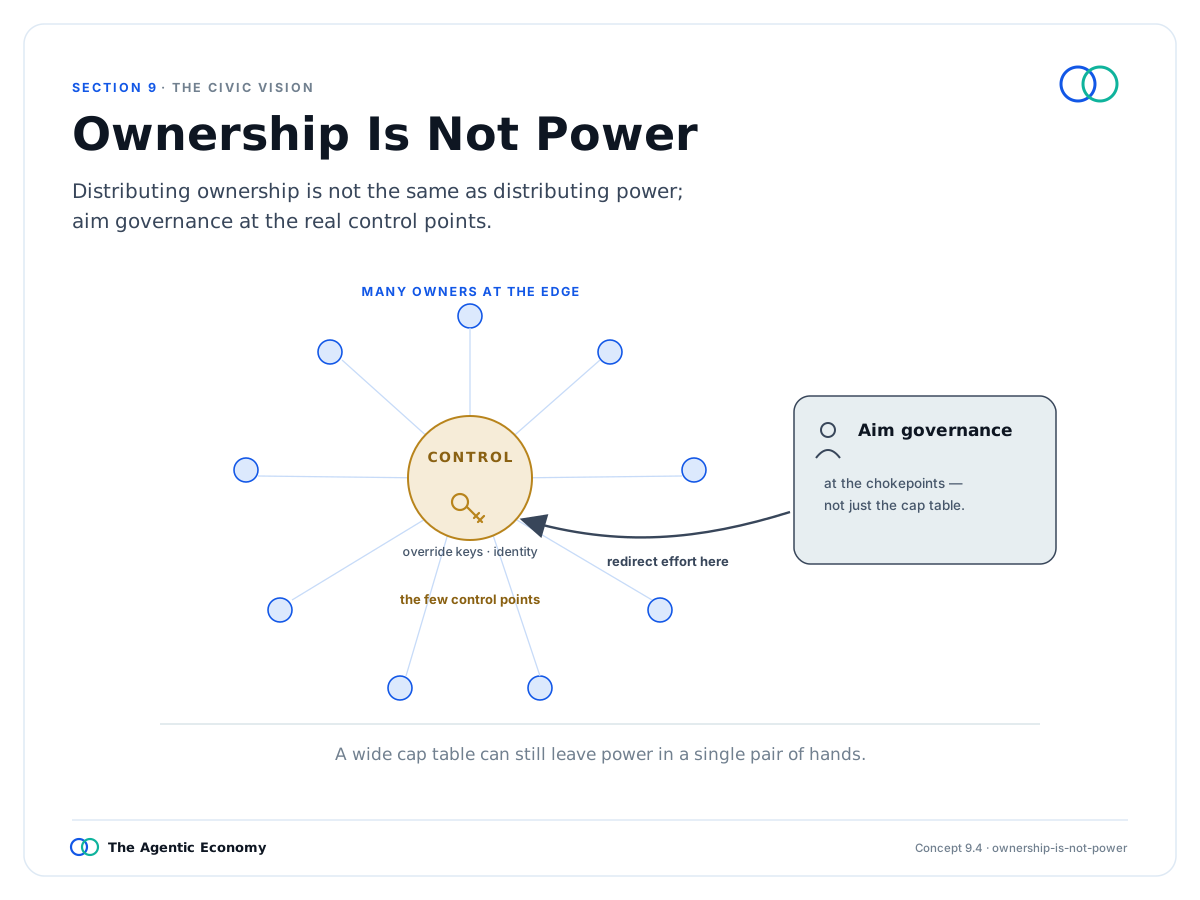
More to the point, the previous section located the durable power not in cash-flow claims but in the control chokepoints: the override key that can reverse the system, and the identity layer reused everywhere. You can distribute economic exposure to a billion people and the holder of the override still controls the firm. So distributing governance is a separate and harder task than distributing upside, and it must be aimed squarely at those control points. We see this fully expressed today over the issue of sovereign intervention in foundational model deployment choices and safety controls.
That means governance designs that break the link between wealth and votes: one-person-one-vote secured by proof of personhood, quadratic and conviction voting, and rights weighted by contribution. It also means public-interest governance of systemically critical infrastructure: independent or public-interest board seats, golden shares, and escrowed, multi-party, on-the-record control over the override and identity layers, including the most powerful and capital AI foundation models, so they aren't private switches. Distributing the upside while the control chokepoints stay concentrated is exactly the half-measure the prior section exposed.
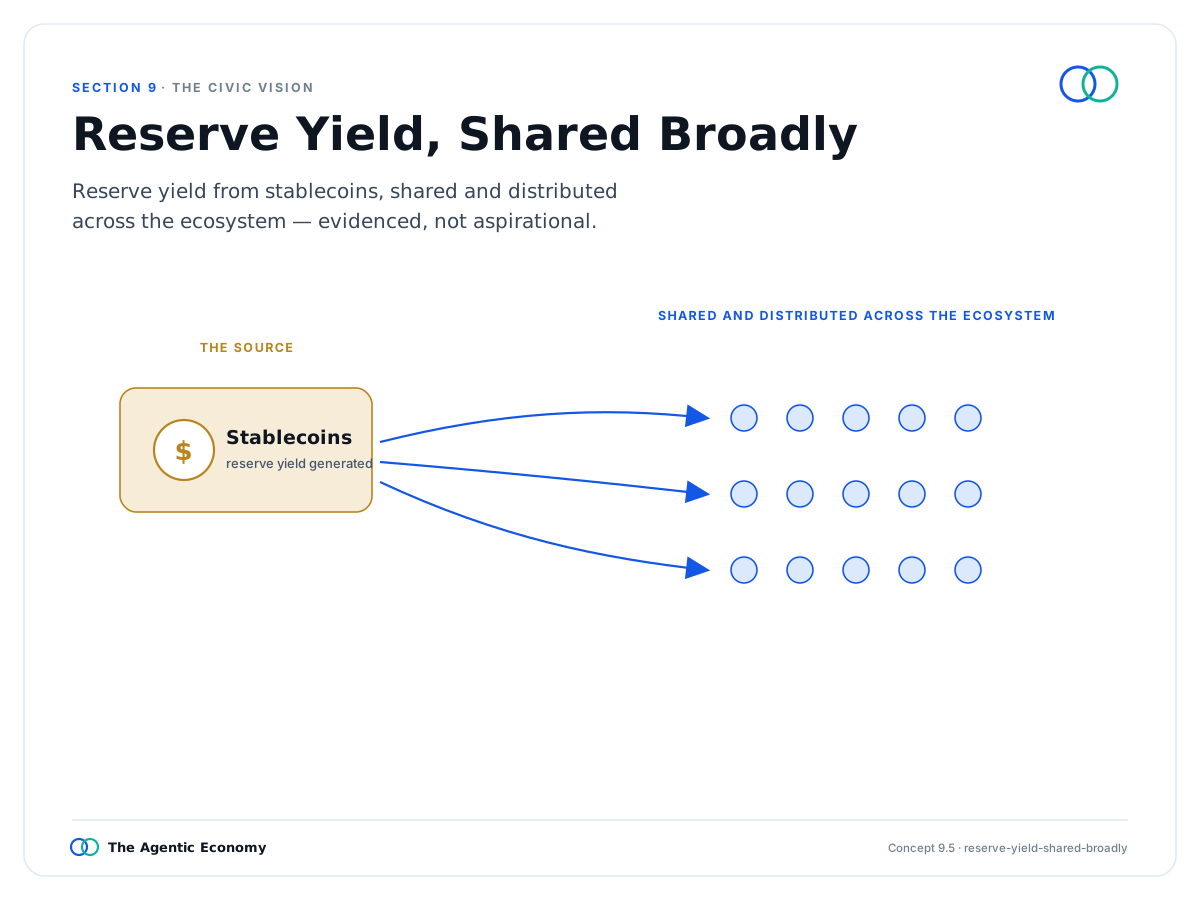
The position is and, not instead of. Broaden ownership by design, and pair it with progressive taxation of capital and automation, public provision of the goods that abundance should make universal, and, in its strongest form, a public stake in the value the rails accumulate: a citizens' dividend or sovereign claim on critical infrastructure, so the public shares directly in the capital that's displacing labor income. Design distributes what the market will bear. Fiscal policy distributes what the market won't.
Open, forkable, interoperability-mandated standards at the identity, settlement, and model-access layers, so the chokepoints stay technically contestable and capture can be defeated by exit. Public-interest governance and escrowed control over systemically critical infrastructure. Ownership distributed by contribution and usage, with limits on transfer to resist re-concentration. And a fiscal instrument, a tax on automation or capital that funds a broad, onchain ownership dividend, distributing a stake rather than just a transfer. These are starting points, not a finished program. But they're the kind of thing the closing call for executable building blocks actually has to contain, and several of them cost incumbents, the author included.
None of this wins on its merits alone, and the political economy has to be faced. The incumbents who benefit from concentration are the same actors with the power to write the rules. The distribution-favoring path doesn't win because it's more just. It wins only through countervailing power: forkability and open standards that make capture technically defeatable, so exit disciplines the chokepoints; antitrust and public mandates aimed at the control layers; public ownership of the most critical rails; and, not least, a broad class of owners with a real stake to defend, which is itself the constituency that makes the politics durable.
The claim that this can't be solved one country at a time is true, but "a shared set of ideas that civic society, business, and political leaders gather around" is not a transition plan. It's the thing that has to be fought for against those who profit from the alternative.
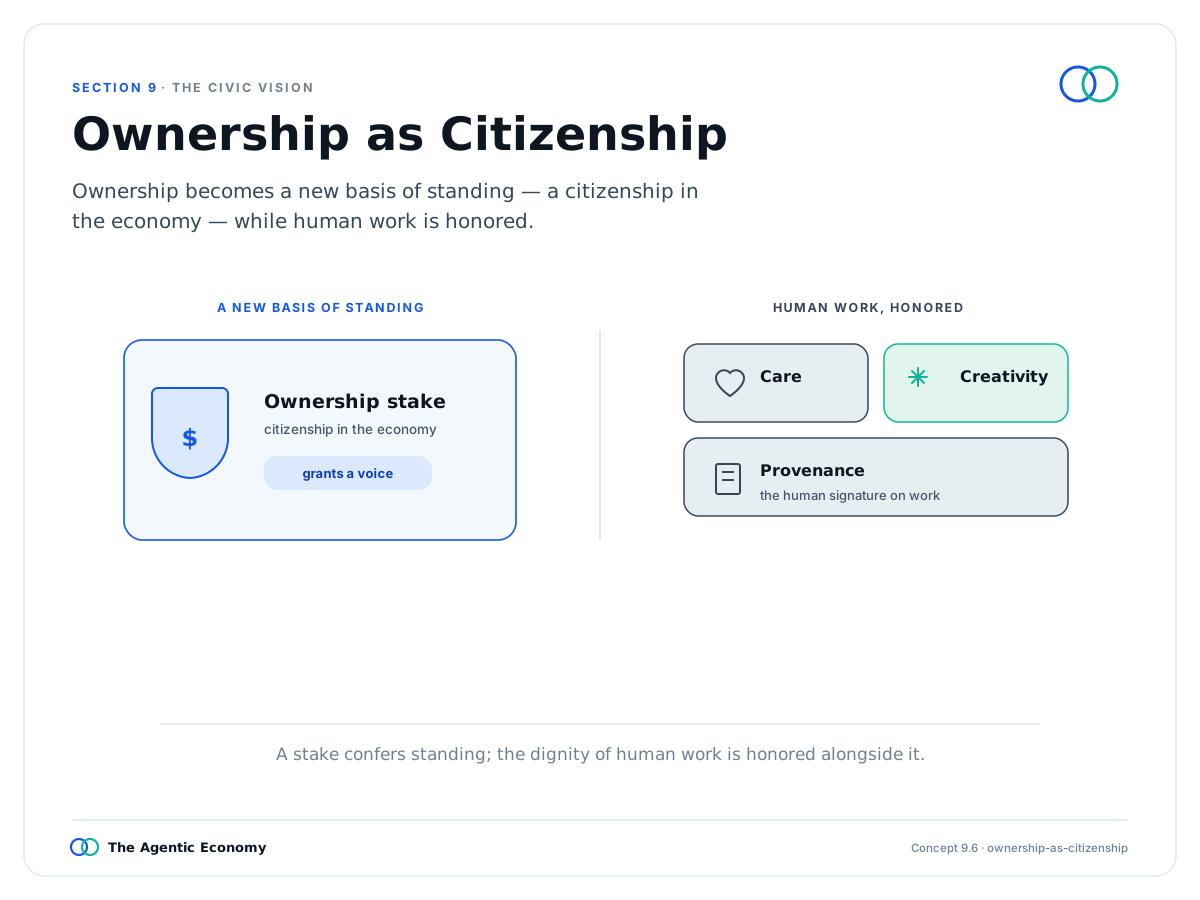
Underneath the economics sits the question the whole transformation finally forces. It deserves more than a gesture, even if it can't be fully answered here. If labor is no longer the organizing principle by which people earn a place and a voice, then ownership may have to take its place: a stake in the capital stock as a new basis of citizenship, the ground of standing, security, and participation that the wage used to provide. And the domains that stay distinctly human as machines absorb the rest: care, creativity, craft, judgment, the value of being made or served by a person, the work of community and meaning, aren't leftovers. They're the things a society of abundance could finally afford to honor and value, if it chooses to price and dignify them rather than treat them as what's left over. How people will actually live, spend their time, and be valued in such a world is the deepest open question this economy raises. The architecture enables an answer without supplying one. What it does is make the better answer possible. Choosing it is ours.
That's the whole of the argument, and it ends where it began. The agentic economy is the onchain economy: AI supplies the labor, and the onchain substrate supplies the form in which money, decisions, coordination, and ownership are expressed. That architecture cuts both ways, and its default is concentration, of income, of power, and of the weaponizable infrastructure everything runs on. But for the first time, the tools exist to distribute ownership, outcomes, and governance broadly enough to turn the same machinery toward shared abundance instead.