Credit Markets: Machine Underwriting, Agent Working Capital, and the Prudential Layer
The previous section ended at a firewall. The base money is ultra-safe precisely because it bears no credit risk and pays no yield for being held. The moment a holder reaches for yield, they have crossed over into lending, taking credit risk in exchange for a credit return. This section is about what grows on the far side of that firewall. Credit does not disappear in a full-reserve world. It is rebuilt, in a form that reaches further, prices tighter, and fails more visibly than the credit system it succeeds.
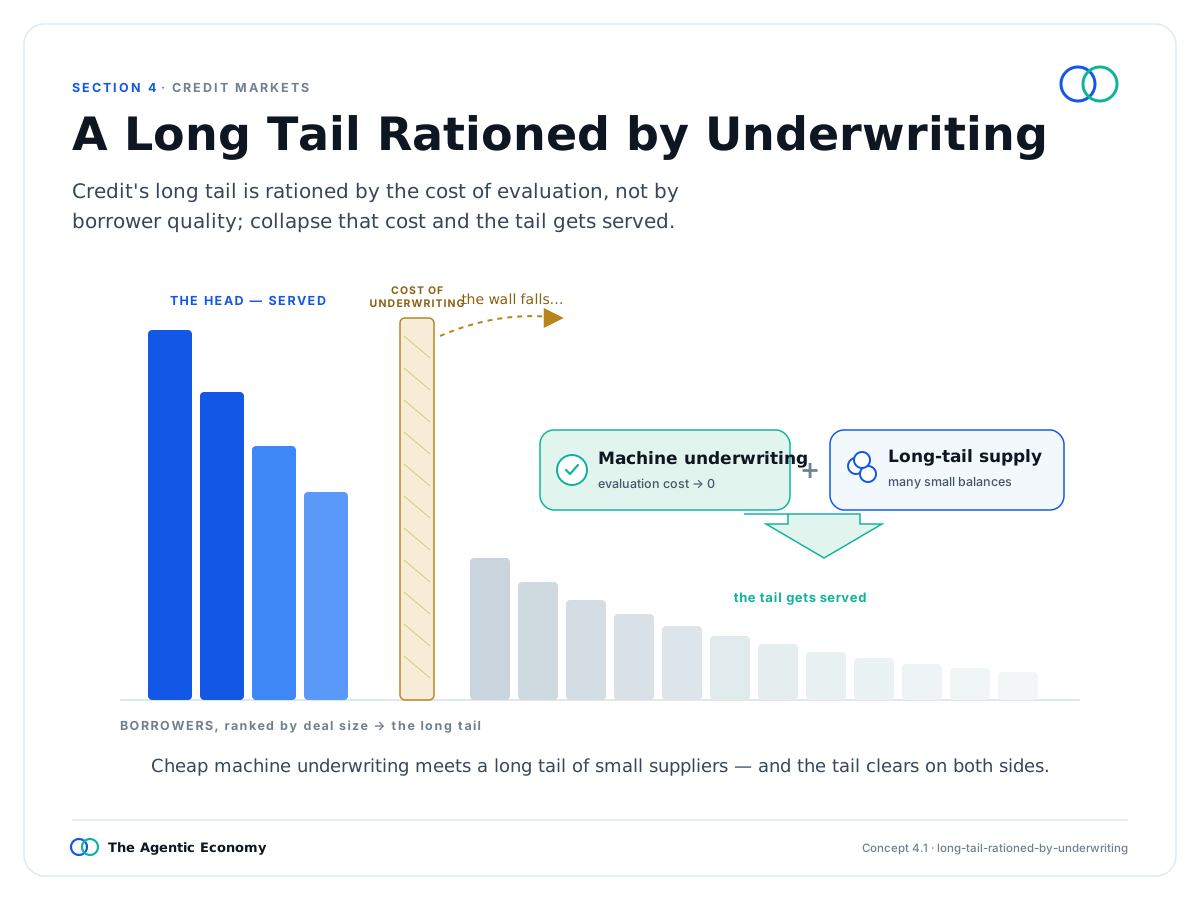
The starting observation reframes the entire problem. The long tail of borrowers (small merchants, gig workers, households, and now agents) has been underserved not because it is bad risk, but because the cost of evaluating each small exposure was often too inefficient and even exceeded expected returns on the value of the loan. Credit was rationed by the price of underwriting, not by the quality of the borrower. Collapse the cost of evaluation toward zero, and an enormous population of sound but previously unbankable borrowers becomes serviceable for the first time.
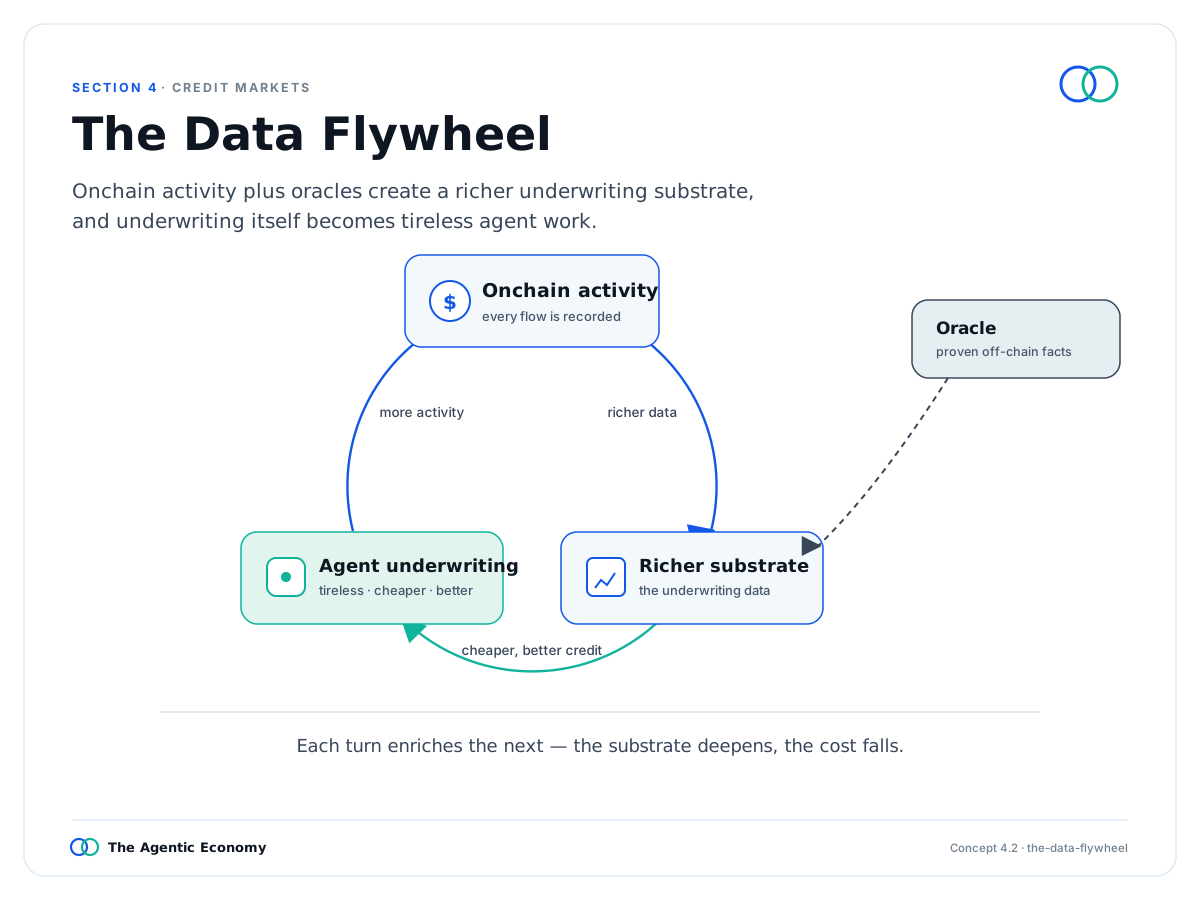
What collapses that cost is a data flywheel. Onchain payment activity is, by its nature, structured, verifiable, and real-time: a far richer substrate for risk models than the lagged, fragmented records underwriting has always relied on. Onchain credit pools allocate risk dynamically using oracles that prove offchain facts into the system: verified data about individuals, households, and firms drawn from existing financial-data rails, credit histories, and hooks into general-ledger and treasury systems. As treasury platforms, fintechs, neobanks, and corporates move their cash onto onchain money, the data grows richer still. Because the networks are global, the enriched data extends globally and ties to every additional currency that comes onchain on the same rails. All of it feeds real-time models with agentic underwriting logic, and the loop compounds. Better data yields better models, which yield better underwriting, which attracts more activity and more data: the same recursive engine that built the long-tail markets of search advertising, content publishing, e-commerce product sales and software distribution, now pointed at credit. The result is, in effect, a real-time, global, entity-permissioned credit-information system, against which today's bureaus look lagged, national, and error-prone.
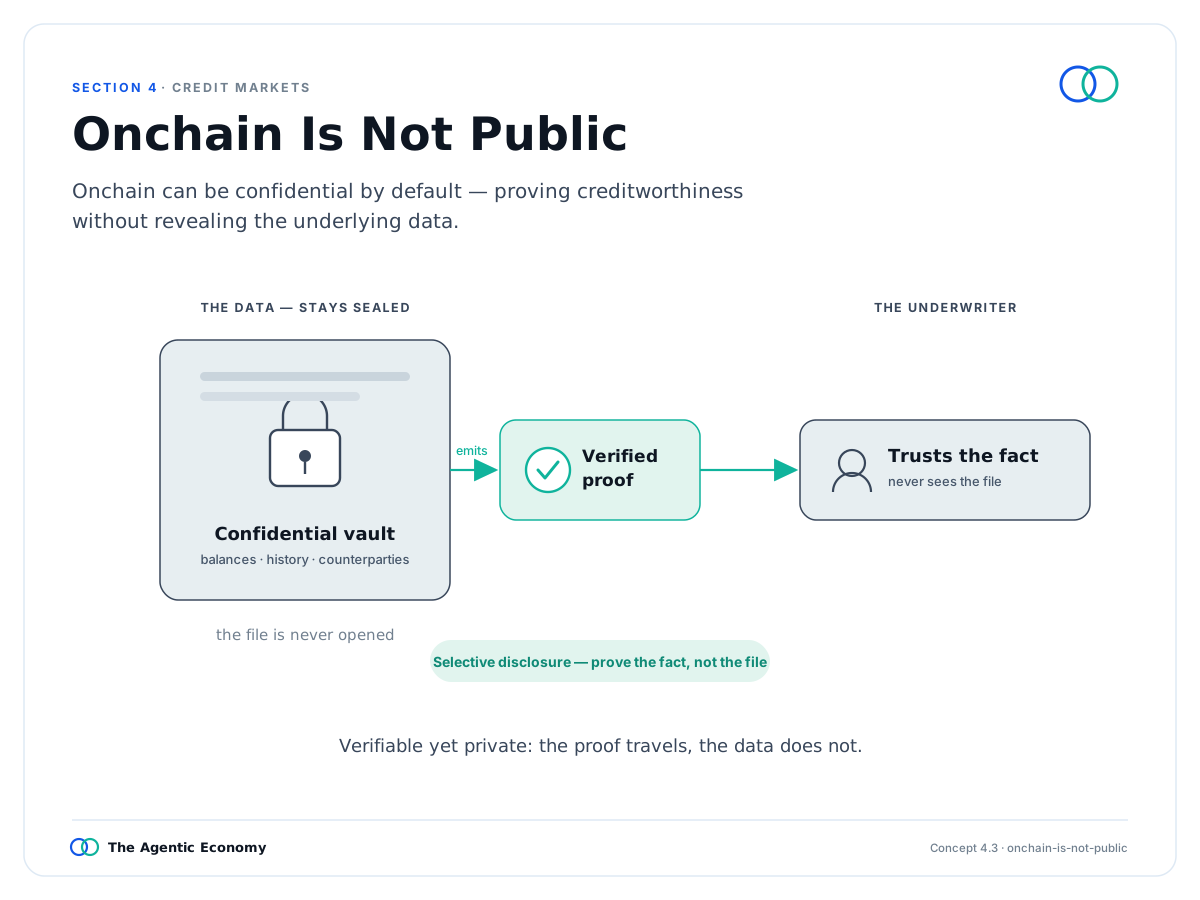
A common objection often arrives here: that putting the economy's credit activity onchain means exposing everyone's financial life on a public ledger. It has a clean answer. Onchain does not mean public. Selective-disclosure and confidential-computing techniques let contract state and positions remain encrypted and private by default, exposed only through configurable, cryptographically enforced access policies, while the protocol's rules still execute deterministically on the encrypted data. An entity can prove the attributes that matter to a lender (creditworthiness, balances, identity in good standing) or have an oracle prove them, without revealing its raw positions to competitors or the public. The flywheel can therefore be rich and private at once, with stronger confidentiality than today's system, where intermediaries see everything. This same capability resolves a tension that recurs throughout this work between comprehensive auditability and privacy: disclosure becomes permissioned and selective rather than all-or-nothing, so a regulator sees what it is authorized to see and a competitor sees nothing.
With evaluation cheap and data abundant, the underwriters themselves become agents, and the economics shift. Agentic underwriters are tireless and continuously optimize toward the efficiency frontier. They compete to underwrite exposures that prior market structures could not reach. They ride the compounding data flywheel. Three forces (a wider range of serviceable opportunities, compounding data advantage, and relentless automated optimization) combine to compress the marginal cost of borrowing, explode the volume of lending, and drive margins down, the same way machine market-making compressed bid-ask spreads in equities.
This runs against an instinct. Normally "cheaper and more abundant credit" is a synonym for "riskier," the reflex of the 2008 financial crisis. Here the system is cheaper, more abundant, and safer and more accessible. It achieves this because the new efficiency comes from better information and better underwriting, not from more leverage. This is the credit-side expression of velocity replacing leverage: volume grows on the back of superior underwriting and high turnover, not on the manufacture of risky synthetic dollars. Two consequences travel with this and are taken up later. Compressed margins can tempt capital to reach for yield, which routes to the prudential layer below. And the residual spread accrues to whoever owns the best underwriting agents, which routes to the concentration of capital question of Section 8.
*Agent working capital, in plain terms*
The core idea is simple. Agents can borrow money to fund their own work. And the work they've been hired to do becomes an asset a lender can finance. Call it agent working capital, and the thing it produces a machine receivable.
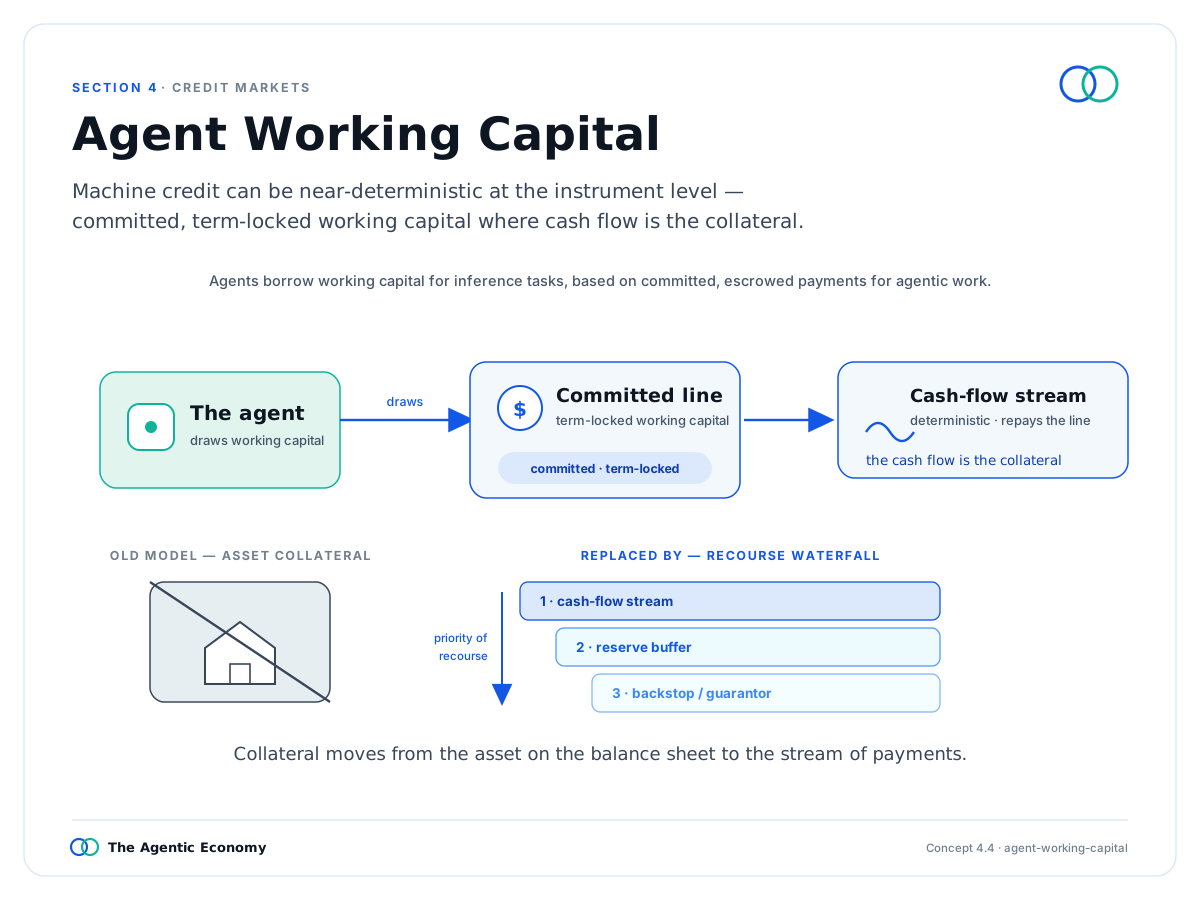
Why is this new? When a bank lends to a person, the biggest unknown is whether they'll pay it back. That's a question about human behavior. Machine credit takes that out.
Here's the simple case. An agent already has a contract for a $10 translation job. It borrows $4 to buy the extra compute to finish. The lender isn't guessing whether the agent "wants" to repay. It's pricing three concrete things: will the work be accepted, will the oracle report it correctly, will a dispute come up. That's it. Open-ended creditworthiness becomes a short, bounded bet on whether one job gets done.
One caveat, and it travels with everything below. This is near-certain for a single loan. It is not risk-free. Bundle many of these together and you still get correlated, systemic risk. What's new isn't that risk disappears. It's that you can see it in real time and insure against it before a blowup, instead of reconstructing it after the crash.
*Collateral flips*
Human collateral is some unrelated asset a court seizes slowly. Machine collateral is the opposite. The first thing backing the loan is the payment for the work itself, assigned onchain so the lender is first in line when the job settles. Recovery is automatic, not a lawsuit.
More layers sit underneath: a bond the agent posts that can be slashed, extra collateral, reputation tied to the human who built the agent, and finally that human standing behind it.
If something goes wrong, recovery runs in order. The escrowed payment nets out first. Then the stake is slashed. Then a shared insurance pool absorbs the tail. Only what's left reaches the human. The first three happen automatically, in seconds. The last one works because there's a real, identified person at the end.
*This only holds at the short end*
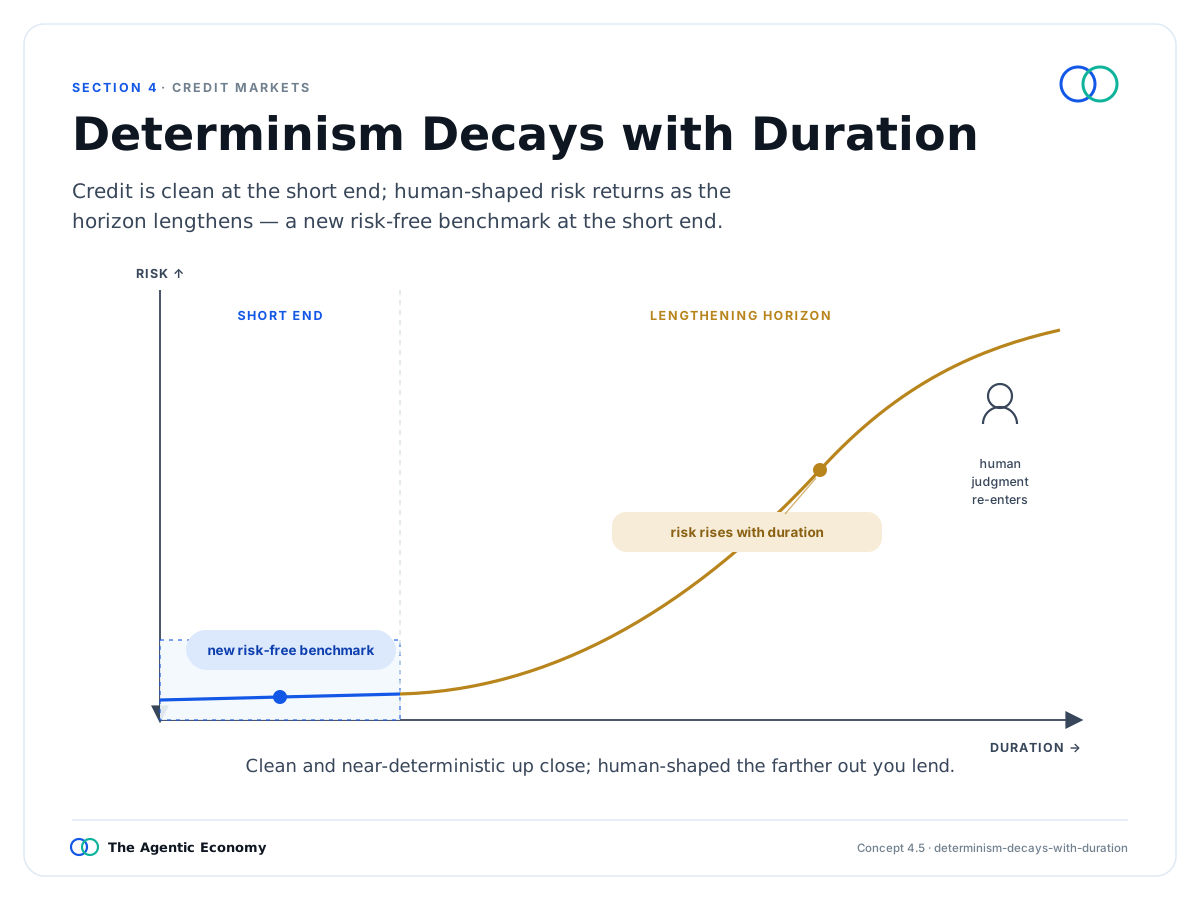
The certainty fades as the loan gets longer. A one-minute compute burst against a signed job is nearly mechanical. A few days of working capital adds more risk. Months of financing some unproven capability brings back all the old unknowns, and it's just ordinary credit again.
So machine credit doesn't replace human credit. It becomes a new near-risk-free floor. Human and firm lending then prices as a spread above that floor. And that spread measures exactly what machines remove: enforcement uncertainty, information gaps, and behavioral default. The top of the curve, where repayment rides on a founder's vision, stays human. It always will.
*Where does the money come from?*
Retail holders lend into these markets the way they already lend into pools today, through the "earn" features in neobanks and exchanges. That grows into "agentic earn": you supply the value, and agents continuously manage yield, risk, and redemption for you. It feels like a checking account with a machine portfolio manager underneath. Corporate treasurers do the same through on-chain cash management. Institutions package it into credit funds. Agents become the main surface all of this flows through.
Two things that shouldn't get blurred.
First, two different yields. The yield on the money's safe backing is not what lenders earn. That sits at the issuer and stablecoin network ecosystem layer. The credit yield is what you earn for lending. It's opt-in, and it carries real risk. Confusing the two would quietly undo the safety the money rests on.
Second, where the value goes. Broad distribution is already how this works. The leading regulated issuers already push most of their reserve income out to the ecosystem, through partners and usage-based rewards, not as interest on the coin. That share is rising. The network tokens emerging here are built as stakeholder instruments, with value flowing to validators, developers, and users. The result: credit supply itself gets democratized and globalized. The long tail both supplies and consumes credit.
A market that clears in milliseconds, underwritten by machines, can build up hidden exposure and unwind faster than any institution could react. Every financial system can fail. The real question is how it fails: opaquely and late, like today's, or rarely and visibly.
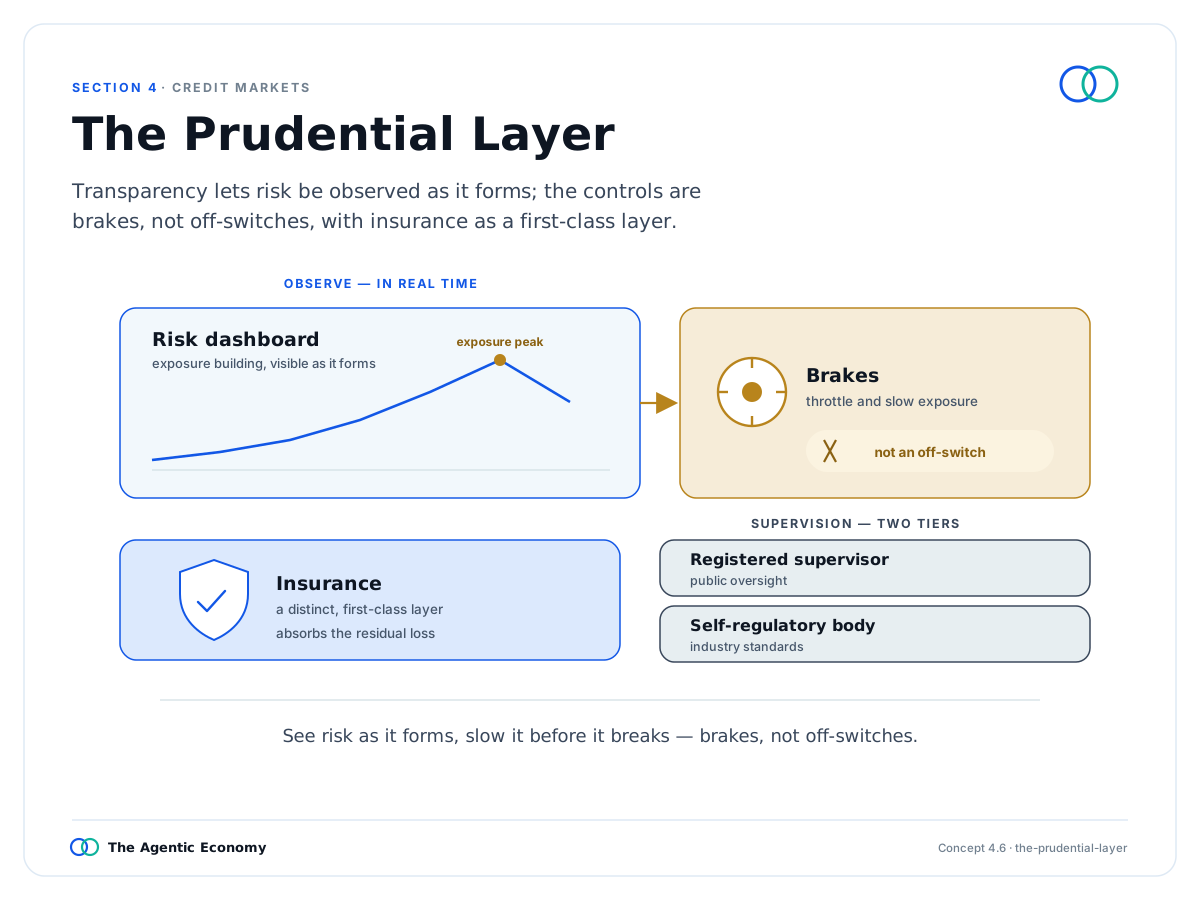
Transparency changes the answer. You can watch the exposure build in real time, every loan, every stake, every link. And you can do it without putting private books on public display. A firm keeps its positions private from competitors, while a supervisor with permissioned access sees the whole system live. That flip, from guessing at risk afterward to watching it form, is the foundation everything else stands on.
But seeing a fire start isn't the same as putting it out. You need brakes written into the protocol, running faster than any committee can meet. Humans set the rules; machines enforce them. The most important brake isn't an off-switch, it's a dial. When too much money crowds into the same model, oracle, or compute provider, it automatically gets more expensive to pile in further. Risk gets steadily pricier instead of slamming into a wall.
Insurance has to be a real layer, not an afterthought: shared pools funded by a small skim on each loan, underwriters above them, reinsurance for the tail. What's new is that premiums price against live, observed risk, not stale averages, and the insurer's own health is continuously verifiable. The last crisis's failed insurer wasn't a problem because it failed. It was a problem because it was opaque, undercapitalized, and nobody could see it. Here, trouble shows up before default.
The money is fully reserved, so the money needs no backstop. There's no leverage to unwind and no run to stop. That's a real break from the banking model. What isn't automatically safe is the credit built on top of the money. Pools can face redemptions; collateral can fire-sale. So the real question is providing liquidity to credit markets under stress, not deposit insurance. The likely answer is private-first: extra collateral, reserve pools, reinsurance, and pre-committed liquidity from large holders. Whether some public backstop should ever reach the most critical infrastructure is genuinely open. But if it's ever needed, transparency makes it faster, smaller, and better targeted than the blind bailouts of the past.
All of this creates new roles: underwriters, insurers, oracle providers, pool operators. Agentic in substance, but each tracing back to a real, answerable human. That's what makes supervision at machine speed possible. The likely structure is two tiers: licensing for the actors big enough to move the whole system, standards and self-regulation for the long tail. Central banks shift from running the old money multiplier to supervising these transparent markets, alongside capital-markets regulators.
The rules aren't finished. Where the perimeter falls, how borderless markets get supervised by national authorities, how to guard against both capture and neglect, none of that is settled. But for the first time, the people responsible for stability would work from a live, verifiable picture of the system, and could step in gradually instead of bluntly. That's a far more resilient foundation than what we have today.
Which raises the obvious next question. A system this transparent, this global, and this unbound to any one country: where, exactly, does it live? That's where the argument turns next.