The Monetary Substrate: Velocity, Safety, and Finality
The reassembled firm of the previous section needs something it has not yet been given: a money its agents can hold and exchange at machine speed. They must move it in enormous aggregate volume and in vanishingly small increments. And they must do so without assessing, on each transaction, whether the money itself is good. That last qualification is the whole game. The properties that make money usable by software at extreme velocity are not the properties that bank-issued money has. Working out why leads to a specific and old-fashioned answer: full-reserve money, settled with finality, on an open network. What follows below is the case for it.
Begin with velocity, because it reorganizes everything else. The marginal cost of storing and moving money falls toward zero. The time to move it falls to hundreds of milliseconds, effectively the speed of light. And the money becomes directly controllable and programmable by software. The result is a substrate for extraordinarily high-velocity money. The same dollar can be put to work across many uses in rapid succession. Small and large amounts alike become usable the instant they arrive. Micro-level value exchange, orchestrated by agents, becomes feasible where it never was before. This is simply the unit economics that information and software already followed on prior internet-scale platforms, now applied to money itself.
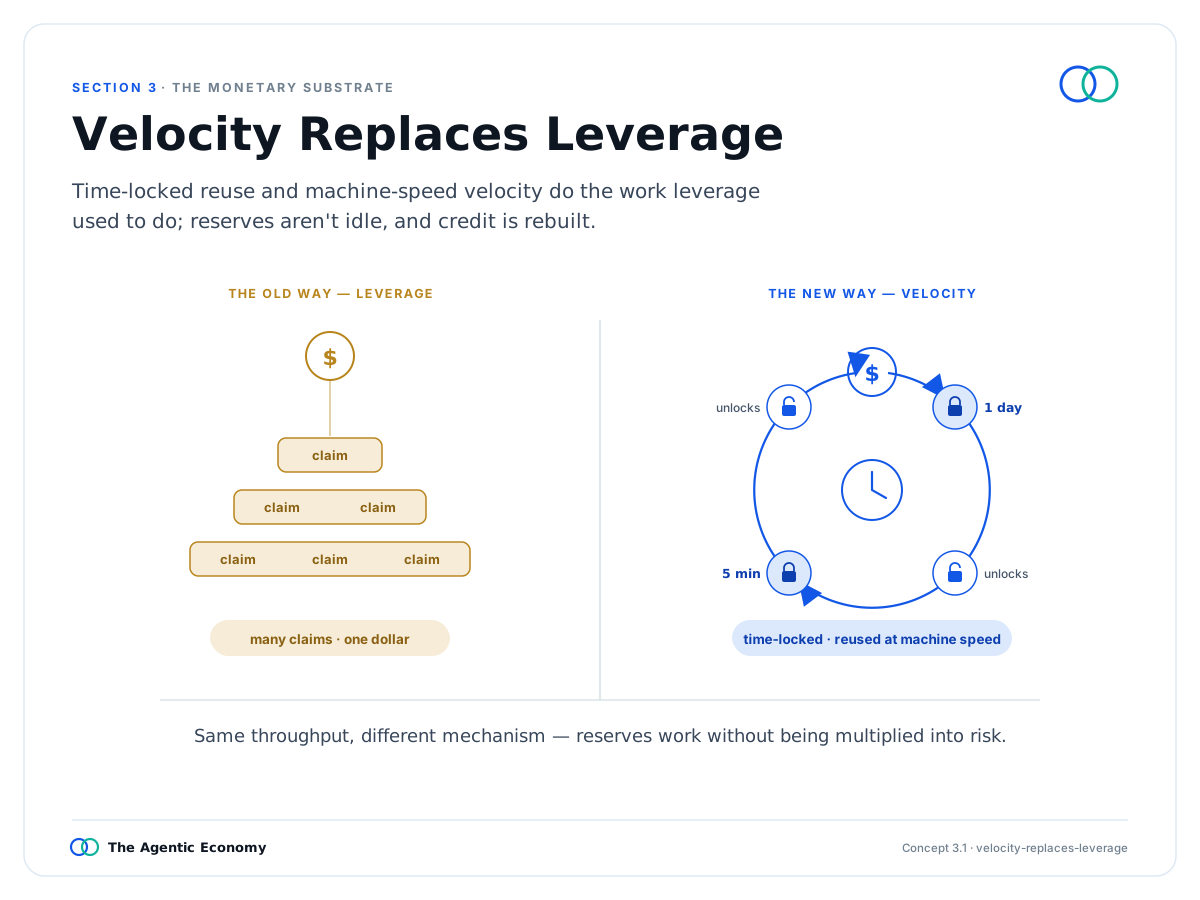
This often raises an objection from monetary economics. The answer is direct. Modern banking manufactures velocity through leverage: a bank lends the same deposited dollar many times over, creating synthetic dollars that carry risk but, in theory, speed money through the economy. If full-reserve money forbids that multiplication, does it starve the economy of credit? It does not. The reuse benefit of leverage can be obtained without permanently creating risky synthetic dollars. When money turns over fast enough, a dollar can be time-locked for seconds and lent to a third party, so velocity itself substitutes for the multiplier. Full-reserve money is not idle either. Its backing in short-term government debt finances government spending into the economy, so the reserves do productive work even at rest. And credit does not vanish. It becomes more powerful. An onchain market for money supports machine-intermediated credit, adjudicated in very short durations, with pooled lending into diversified borrowers while the lender keeps a demand-deposit-like right of instant redemption. That is the substance of the next section. Credit is not starved by full-reserve money. It is rebuilt on top of it, and made more capable and safe.
Why insist that the base money carry no embedded risk at all? Because velocity makes risk-bearing money dangerous in exact proportion to its speed. A bank run is already faster than it used to be. Mobile banking has shown that a run can overwhelm even a very large institution in hours rather than weeks. At machine speed it becomes effectively instantaneous. An agent deciding whether to accept a unit of money wants assurance of one-for-one redeemability that never has to be questioned. If it must worry about redeemability, it has to price that risk on every transaction. Pricing risk on every micro-transaction at million-fold velocity is economically impossible. There is a subtler failure too. In a world of thousands of distinct bank-money issuers, each issuer's dollar is its own IOU carrying its own risk. A dollar from one issuer is not interchangeable with a dollar from another, and the prices of these supposedly identical dollars diverge. That destroys what monetary economists call the singleness of money: the property that a dollar is a dollar, fungible and at par, which money must have to function as a unit of account at scale.
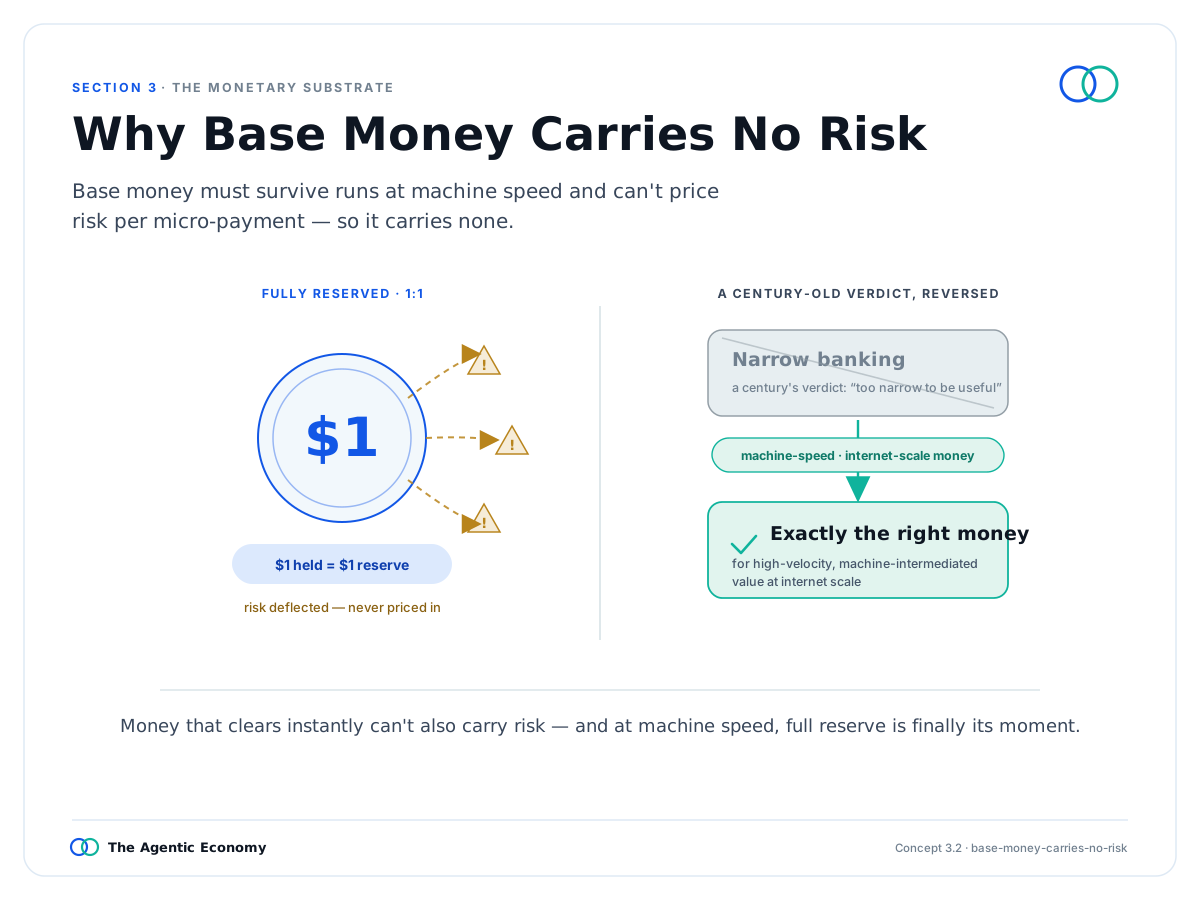
The agentic economy is global and runs at internet scale. A far-flung agent making a real-time settlement decision cannot pause to evaluate the creditworthiness of distant issuers. The national backstops that make bank money tolerable (deposit insurance, a lender of last resort) do not reach most actors in a borderless system. Full-reserve money is the only form that holds par for everyone, everywhere, without those backstops. This is the old idea of narrow banking: one-hundred-percent reserves, long proposed and long dismissed as safe but not useful enough to bother with. What changes the verdict is that machine intermediation and internet-scale utility make narrow banking maximally useful for the first time.
Safety of the unit is necessary but not sufficient. The settlement of the unit must be equally beyond question. Sound money has historically rested on a "no questions asked" basis: money works precisely because no one has to perform due diligence on it before accepting it. The financial system formalized this in the Principles for Financial Market Infrastructures, whose core assurance is that when a payment system deems a transaction final, it is final. That assurance becomes vital at high velocity, and it is exactly where decentralized networks have fallen short. Hard forks could un-recognize previously settled transactions. Chain reorganizations could unwind them. The best such systems offered was probabilistic finality: wait some number of confirmations and a reversal becomes unlikely. Agents transacting at extreme velocity cannot operate on "probably final." They require deterministic, sub-second finality: settled means settled, now. That is a concrete technical requirement that a chain engineered for it can meet and older designs cannot. It sits alongside par and redeemability as the third member of a triad. Par, redeemability, and finality together are what let money be accepted by a machine without any per-transaction scrutiny.
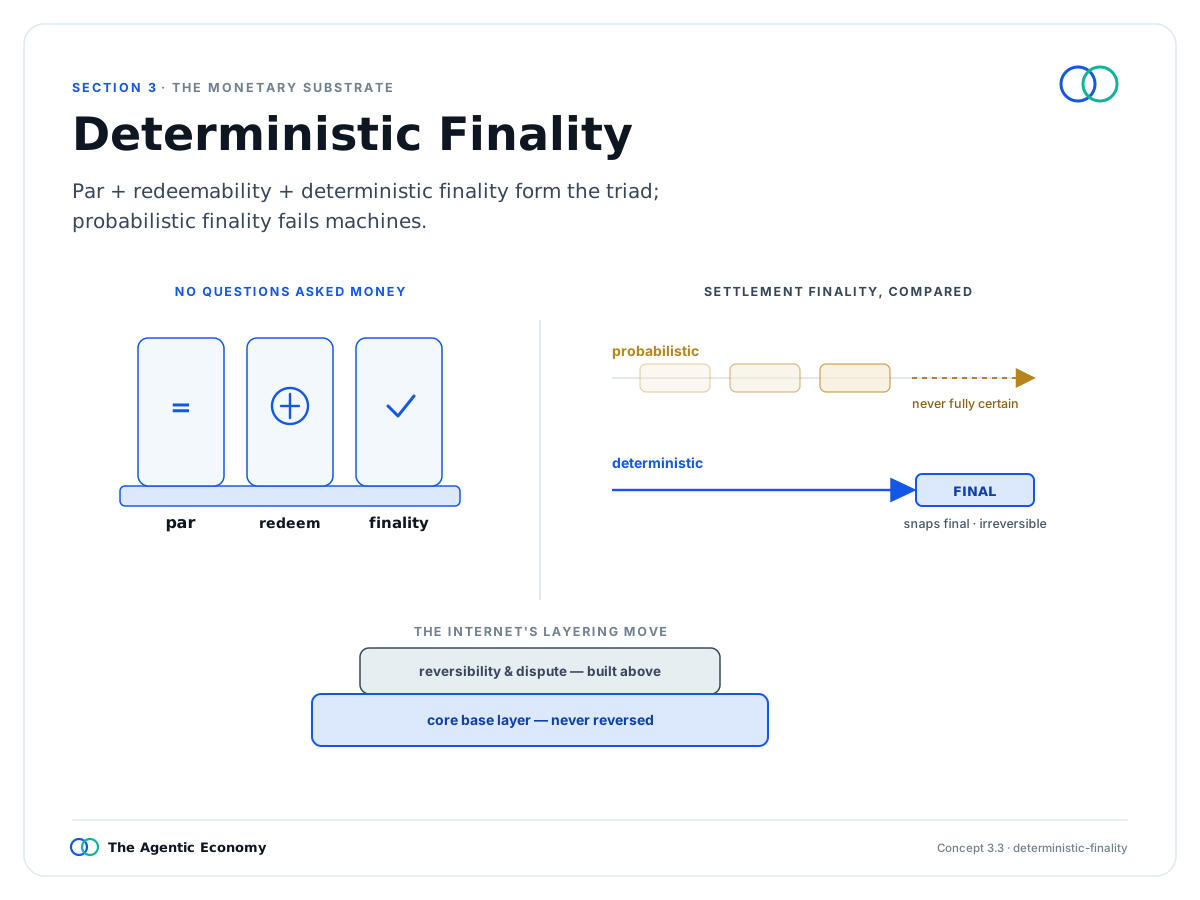
Settlement finality raises an apparent paradox, since people also want reversibility: refunds, fraud protection, the ability to undo a mistaken or fraudulent payment. The resolution is architectural. It is the same move the internet made in layering reliable protocols over a simple, unreliable base. Keep the base money deterministically final, and build reversibility as optional protocols on top of it: time-adjudicated and event-based escrow, refund pools, insurance against those pools. Do not bake reversibility into the money itself. Reversibility welded into the base unit would destroy the no-questions-asked property and force every agent to price unwind-risk on every transaction, reproducing the failure of IOU money. Pushed to the edges as composable layers, the same protections become available without compromising the core. Irreversibility, in this light, is not a hazard to be mitigated but a feature to be relied upon. A final settlement is a guarantee an agent can build on precisely because it never has to think about it again.
None of this safety is self-enforcing. It rests on institutional architecture, and that architecture is now being built. Under recent law, large stablecoin issuers are overseen by federal national-bank regulators. They are structured with bankruptcy-remoteness, so the money is isolated from the failure of any issuer or bank. National trust-bank charters supply a fiduciary apparatus that walls the base-layer monetary obligations off from credit risk: narrow banking reborn. The reserve design then gets safer as the system grows. Eligible reserves are evolving from short-term government debt toward direct central-bank cash and overnight repurchase agreements with the central bank. Policymakers increasingly favor this direction, and it is mirrored internationally: the Bank of England's proposals point the same way, and European payment-systems law already contemplates e-money issuers' access to central-bank balance sheets.
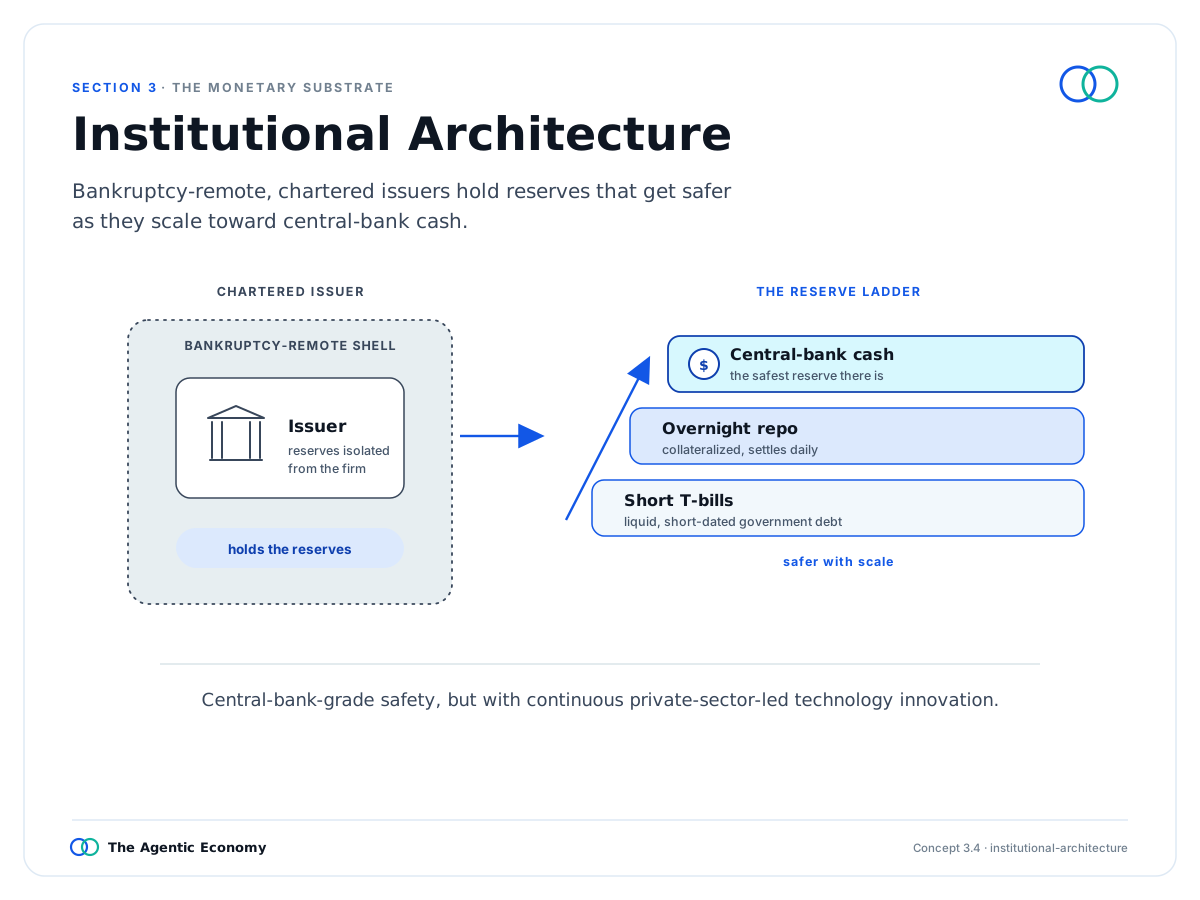
This is the precise inverse of fractional-reserve banking, where scale concentrated systemic risk. Here, the larger and more systemic the money becomes, the closer its backing moves toward central-bank money itself. The destination is central-bank-grade safety without a central-bank digital currency: private, programmable, internet-native money that is nonetheless bankruptcy-remote, fiduciary-chartered, and ultimately backed by the safest asset there is.
What becomes of monetary policy when the fractional-reserve multiplier is no longer the channel it works through? The price lever remains fully intact. The central bank still sets the policy rate. Because stablecoin reserves are short-duration and overnight instruments, that rate transmits to the reserve base of the money supply immediately and fully, arguably a more direct transmission than the bank-lending channel ever provided. What fades is not the central bank's power but the multiplier as its transmission mechanism.
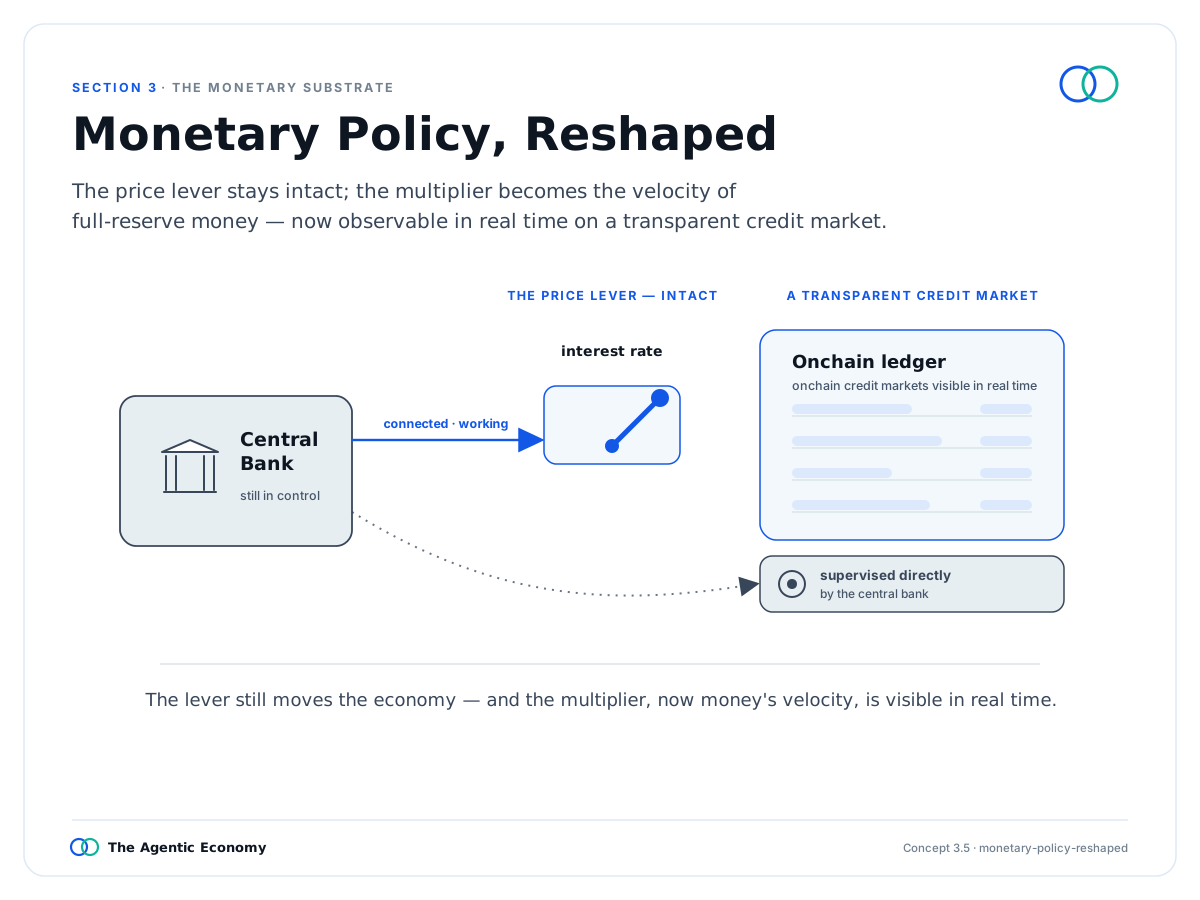
In two respects the central bank's hand may actually strengthen. Transmission becomes more direct. And because onchain credit is transparent and observable in real time, the central bank can observe credit conditions directly rather than inferring them from lagged, aggregated reports: visibility it has never had. Its role partly migrates from operating the multiplier to supervising a transparent machine-credit market: a new frontier of registering and prudentially supervising machine and agentic credit markets, whose participants are agentic in substance but, through the accountability chain established earlier, human-accountable in the end. This is a genuine expansion of the supervisory mandate, not a hollowing-out of it.
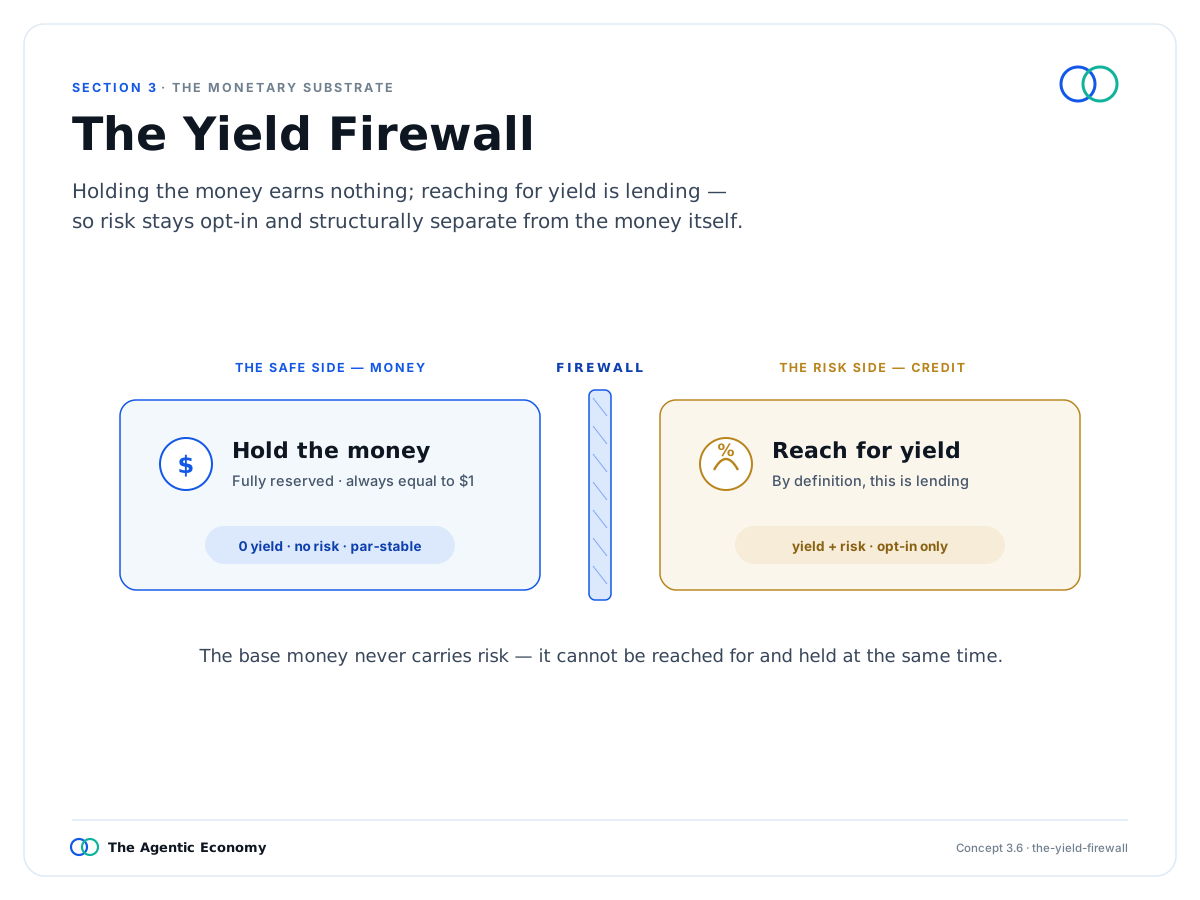
One distinction is crucial to understand. The base money described here is ultra-safe precisely because it bears no credit risk and pays its holder no yield for merely holding it. The reserve yield on its backing flows to the issuer and, through it, to the ecosystem of the stablecoin network, but holding the money is not an interest-bearing position. That is deliberate. It is the firewall that keeps the base unit safe. The moment a holder reaches for yield, they are no longer simply holding money. They are lending it into a credit market, taking on credit risk in exchange for a credit yield, and that is a distinct and opt-in choice. The safety of the base and the return from putting the base to work as credit are two different things. Conflating them would undo the entire safety argument just built. Holding that firewall firmly in place, the argument can now cross it, into the credit markets that grow on top of this new form of money, and the machine underwriting that makes them reach further than credit has ever reached.