Assembly, Coordination, and Why the Firm Goes Onchain
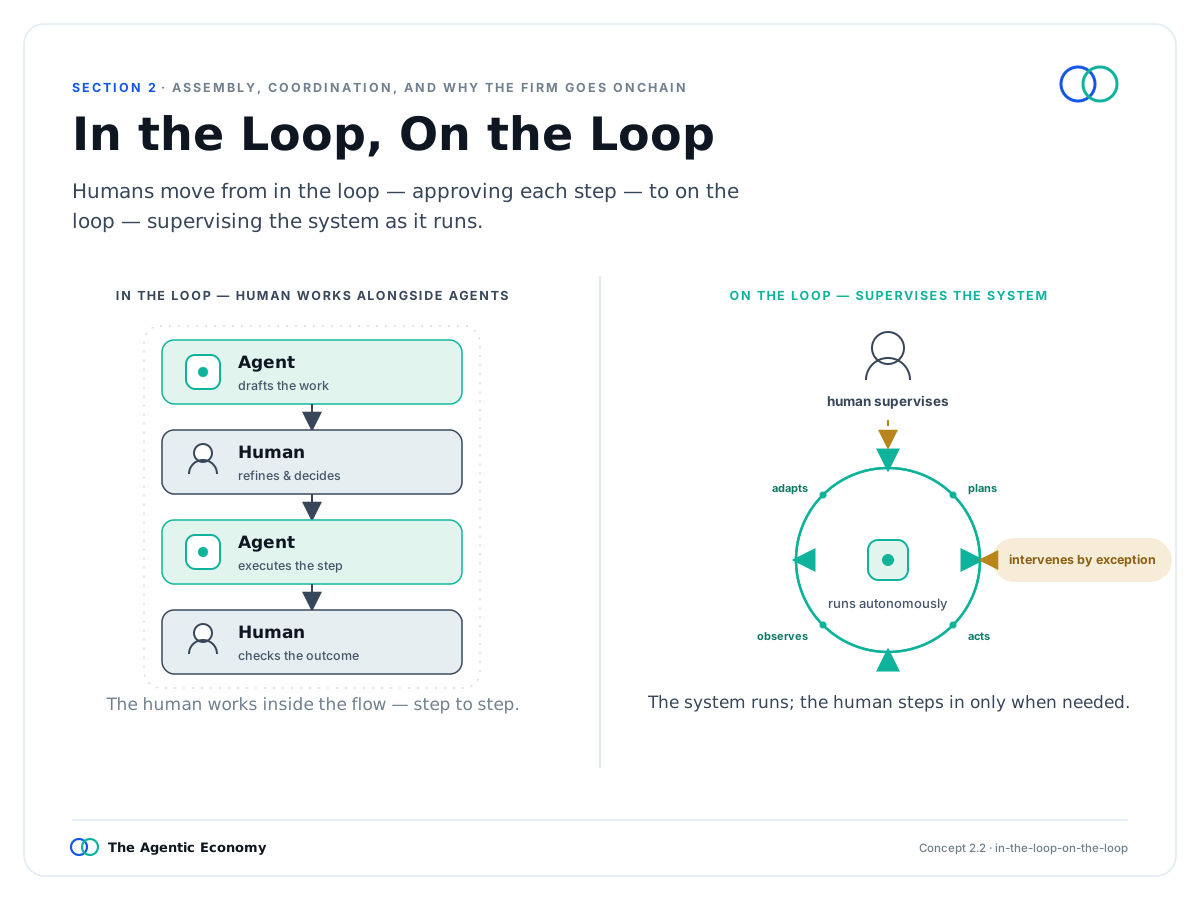
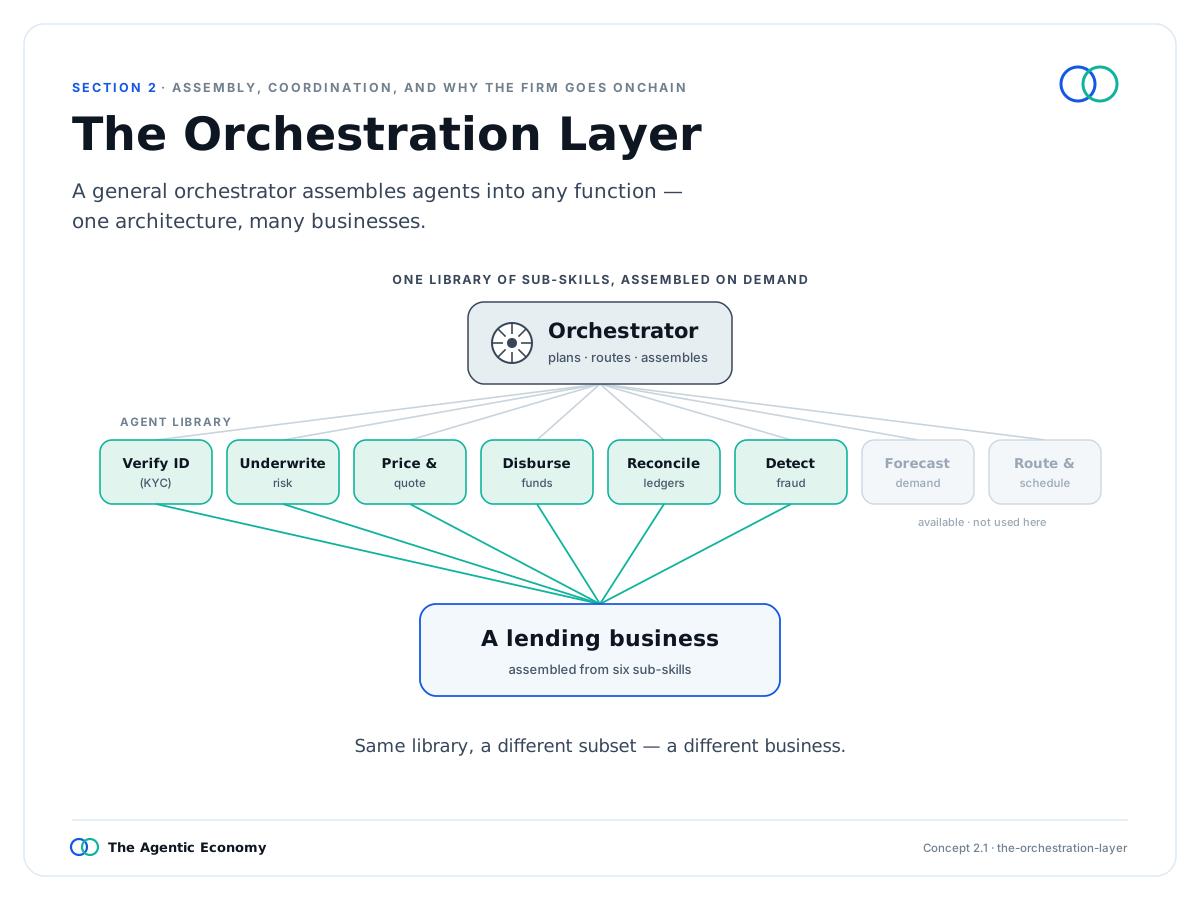
Once the firm decomposes into agentic skills, the question is no longer what can be automated but how the pieces are reassembled into coordinated work. The mechanism is an orchestration layer built on the agentic capabilities of the most advanced foundation models. At its center sits a general orchestrator: an agent that, for any given body of work, breaks an objective into a pipeline of tasks and dispatches them to sub-agents. The surrounding infrastructure initializes the pipeline, maintains its context and memory, and executes and recomposes the results that come back. The same generalized architecture serves any function. A marketing pipeline, a finance pipeline, a product or sales pipeline are, structurally, the same machine pointed at different work. Humans are not absent from it. They occupy two distinct positions. Some sit in the loop, doing or reviewing specialized work inside a pipeline where their judgment is required. Others sit on the loop, setting the objectives, defining the acceptance criteria, watching the quality of outputs, and deciding when the machine should stop and ask. This distinction between operating inside the work and supervising it from above is the concrete form human oversight takes in an agentic firm. The infrastructure to support it, pipelines, orchestration, and durable memory, is maturing into broad availability now, not at some distant horizon. Many cutting edge firms and teams are in full-on execution mode on these new architectures.
What begins as an internal exercise does not stay internal, and the reason explains why an open economy of agents emerges rather than merely a set of better-automated companies. To orchestrate its own work, a firm must turn each function into a well-defined skill, trained on its domain, connected to the right data, continually updated. But a skill clean enough to be orchestrated inside a company is, by construction, clean enough to be discovered and hired from outside it. The moment internal modularization meets agentic marketplaces and agentic payments and contracts, the disaggregation a firm performed to optimize itself becomes the substrate of a cross-organizational market. Companies build the open agentic economy as a byproduct of optimizing themselves. No one has to set out to create it.
That market could take one of two broad shapes, and which it takes matters enormously. In one, companies consume intelligence as a metered utility from a handful of large platforms. In the other, a genuine labor market of specialized agents forms that are hired to do particular work. The second is both more likely and more consequential, for the same reason it has held across software generally: deep domain knowledge is durably valuable. General foundation models and skill libraries supply a great deal, but the lasting business is in agents that go very deep in a domain, creative marketing, video production, intellectual property, contract negotiation, and thousands of other crafts, by aggregating proprietary context and specialized data, refining their capability continuously, and hardening themselves to the security and reliability standards enterprises demand. The foundation model is a commodity input. The durable value sits in domain depth, proprietary data, relentless iteration, and enterprise-grade trust. Specialized agents make their capabilities discoverable through agentic registries and marketplaces, advertised in metadata that is legible to humans and directly consumable by other agents, and they compete fiercely, among the most intense competition anywhere, to deliver stronger results.
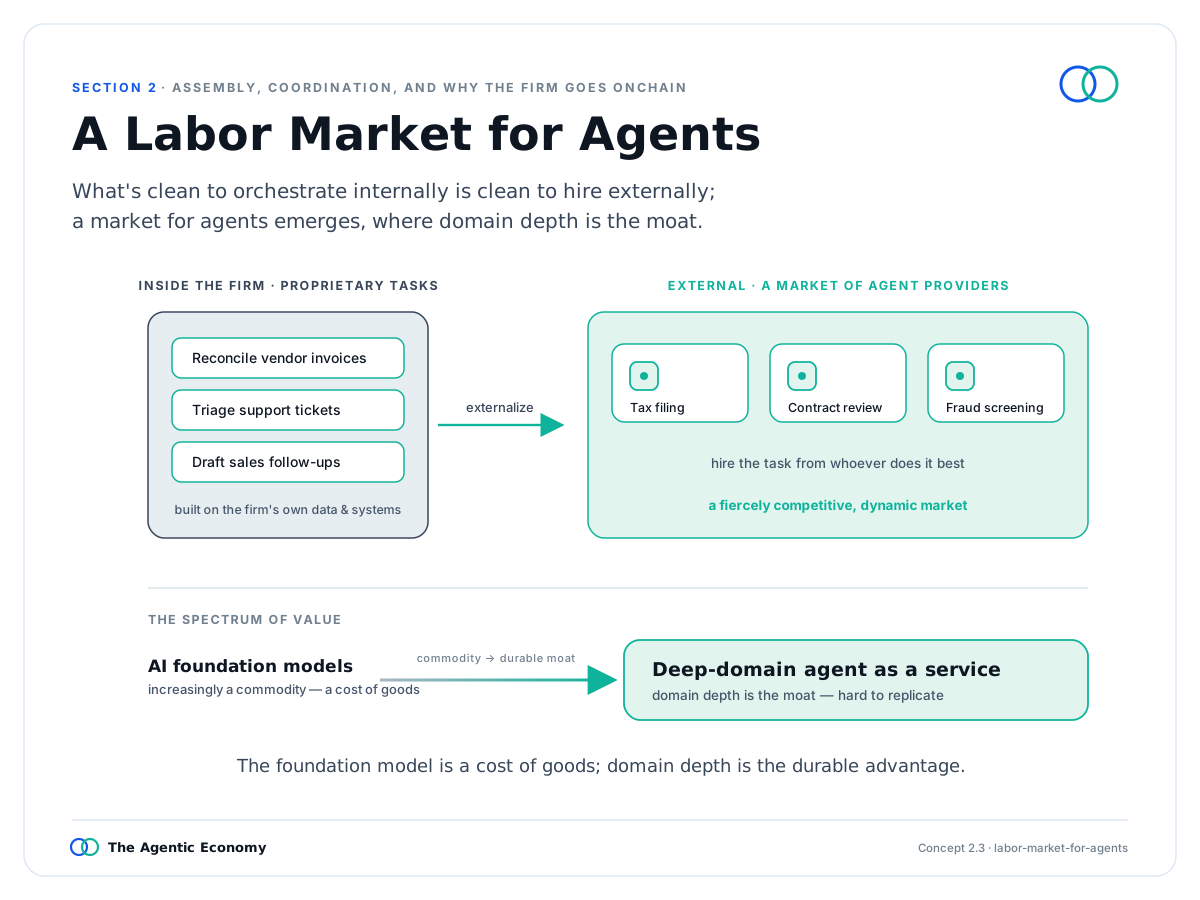
The pattern rhymes with what came before. Mobile operating systems let app developers flourish at a scale no one had imagined, and creator platforms let content specialization explode. Here the marketplaces and the tooling to build, discover, and monetize agents are the comparable prize. One economic detail is worth seeding now and developing later: because foundation models compete fiercely, a specialist agent will route work across them to optimize its own cost of intelligence, so the model becomes a cost line and the agent becomes the business, a reversal whose consequences belong to a later section.
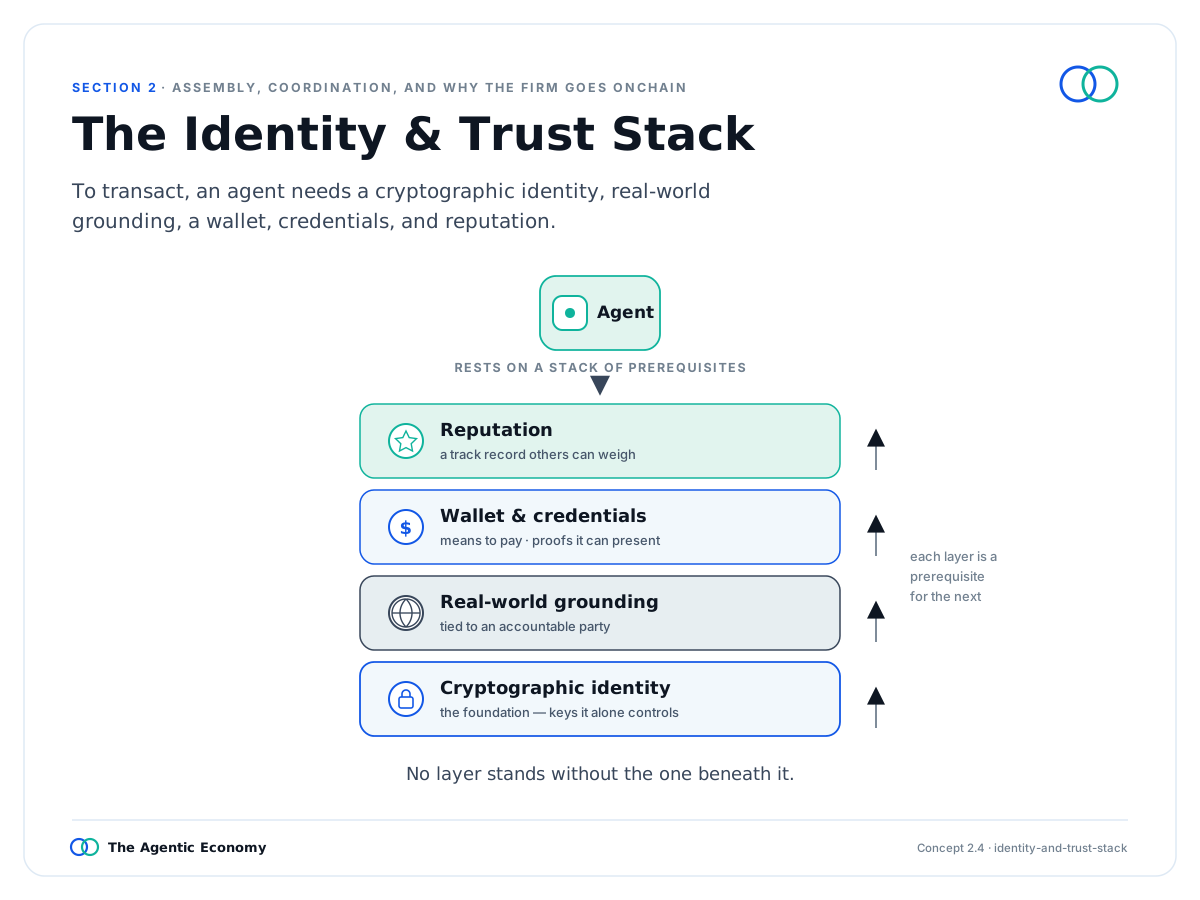
A labor market for agents runs immediately into a hard problem, and solving it is what forces the whole edifice onchain. Before an orchestrator hires an agent, it must know that the agent is real, that its work can be trusted, and that someone is accountable if things go wrong. None of that is given when the worker is software that may have been assembled anywhere in the world. The answer is that an agent's identity is not one thing but a stack of layers. At the base is cryptographic verifiability: an economic operating system built on a public blockchain whose data, transactions, and code execution are publicly verifiable in real time, rooted in cryptography rather than in trust of any intermediary.
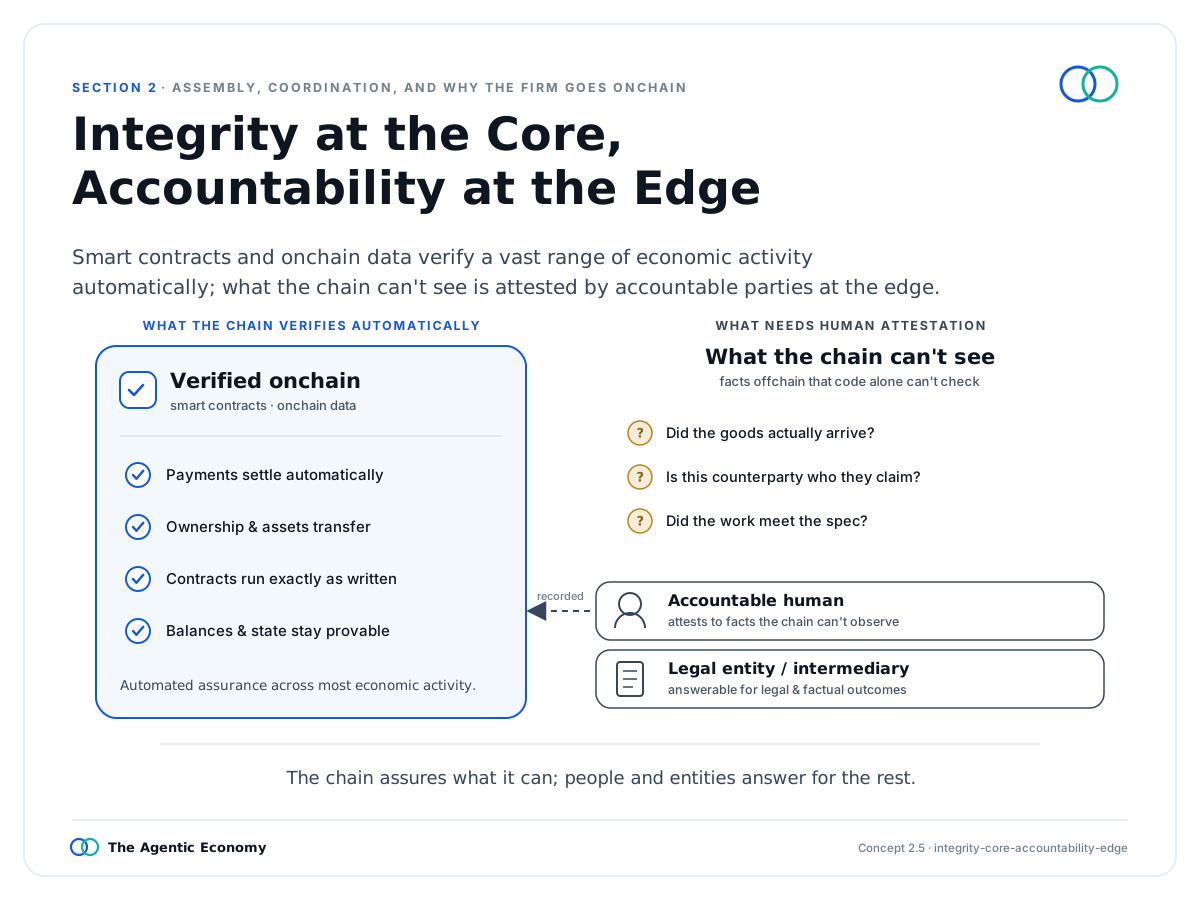
Trust-minimization at the core holds for the things the system can verify for itself: that a transaction occurred, that a balance moved, that a contract executed as written. It does not resolve facts about the outside world, adjudicate disputes, or reverse an outcome that was correct in code but wrong in the world. Those are handled not by the deterministic core but by an accountable periphery: oracles that attest to external facts, adjudication for disputes, and human override for the cases that demand it. The architecture is therefore integrity at the core and accountable intermediation at the periphery, a structure this work develops fully when it takes up the legal form of the firm. The base is trust-minimized. The edges are deliberately, and accountably, not.
On that base sit the layers that make an agent answerable. The first is real-world grounding. An agent's work must ultimately tie to a real, identified entity, and the regulated identity-verification infrastructure that financial-infrastructure firms already operate at enormous scale, knowing and validating businesses and individuals through established controls, becomes the means of answering, for any agent, who created it, whether they are legitimate, and whether they are in good standing. The second is the agent's own economic existence: a wallet it controls and verifiable credentials that carry its real-world hooks, so that its standing can be depended upon. Atop these sits reputation, built over time the way reputation has always been built on the internet, through the accumulated record of work and the reviews of those who relied on it, except that here it can be far more resistant to fraud, because it is rooted in verified real-world identity rather than in a disposable pseudonym. This is also why the firm goes onchain rather than simply trusting a marketplace's private database. A private registry binds trust to a single operator. The cryptographic and real-world-identity roots of an onchain system make trust portable. It travels across marketplaces, across firms, and across borders without requiring anyone to trust a particular platform owner, which is exactly what an open economy of agents transacting globally requires and what no private database can deliver at that scale.
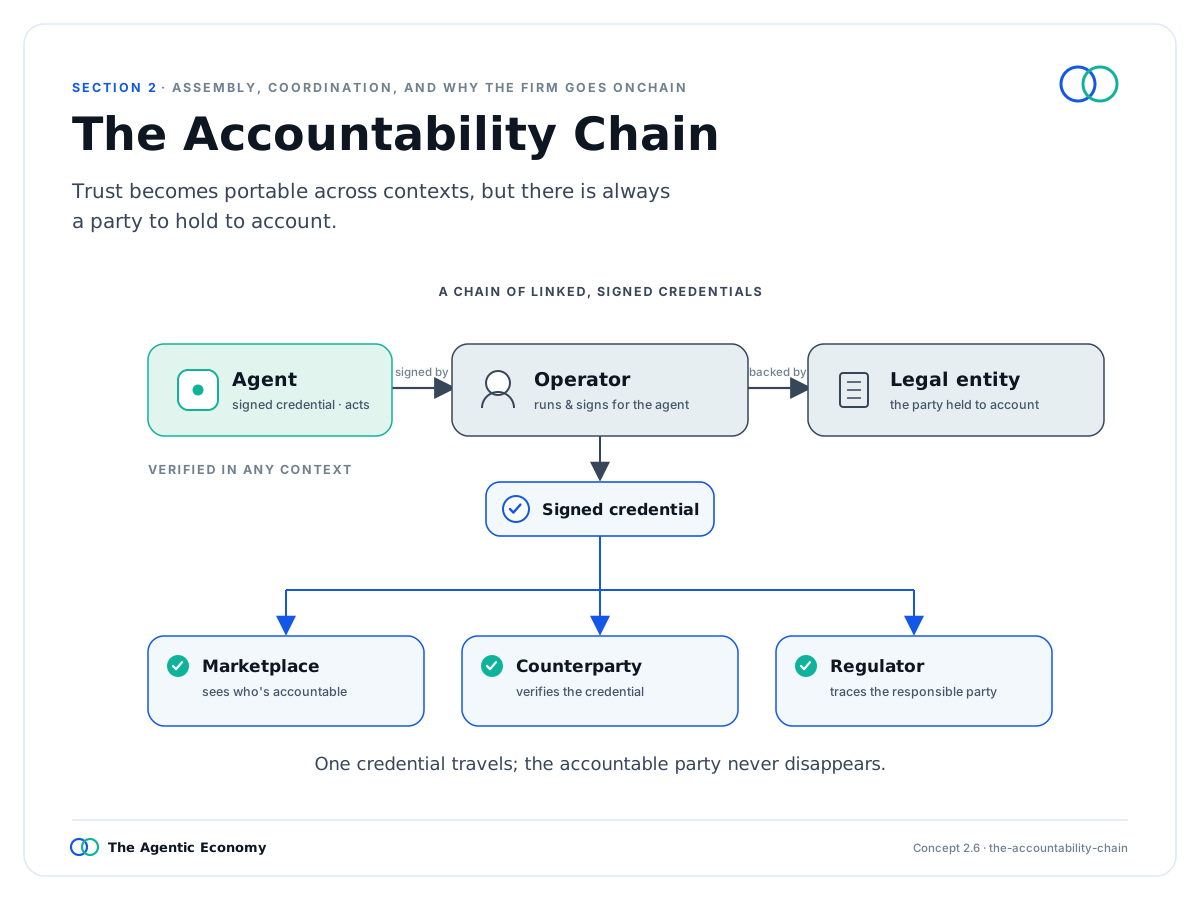
These layers together establish the accountability chain. Every action an agent takes traces, through its wallet and its credentials, back to a verified real-world creator in good standing. Autonomy, in this economy, is not anonymity. An autonomous agent is an accountable one, and the chain that makes it so, agent to wallet to credential to identified, answerable entity, is the thread that recurs throughout this work wherever the question arises of who, in the end, is responsible. It is what lets a counterparty hire a piece of software with confidence, what lets a regulator find a party to hold to account, and what keeps machine autonomy from collapsing into a world of unattributable action.
With these pieces in place, the firm can be seen in its reassembled form. A small human core sits on the loop, setting objectives and exercising judgment. Orchestrators coordinate pipelines of specialized agents, some built in-house and many hired from a global marketplace. Each engagement is an enforceable contract executed in software. And every actor, however autonomous, resolves through the accountability chain to someone who answers for it. At that point coordination has stopped being an internal management problem and become an economic one, conducted in software across the boundaries of the firm, and the agentic corporation has begun, quietly, to reveal itself as the onchain corporation. But all of this presumes something not yet established: a form of money these agents can hold and exchange at machine speed, in enormous volume and tiny increments, without taking on risk in the very act of transacting. That money is the monetary substrate the next section builds.